
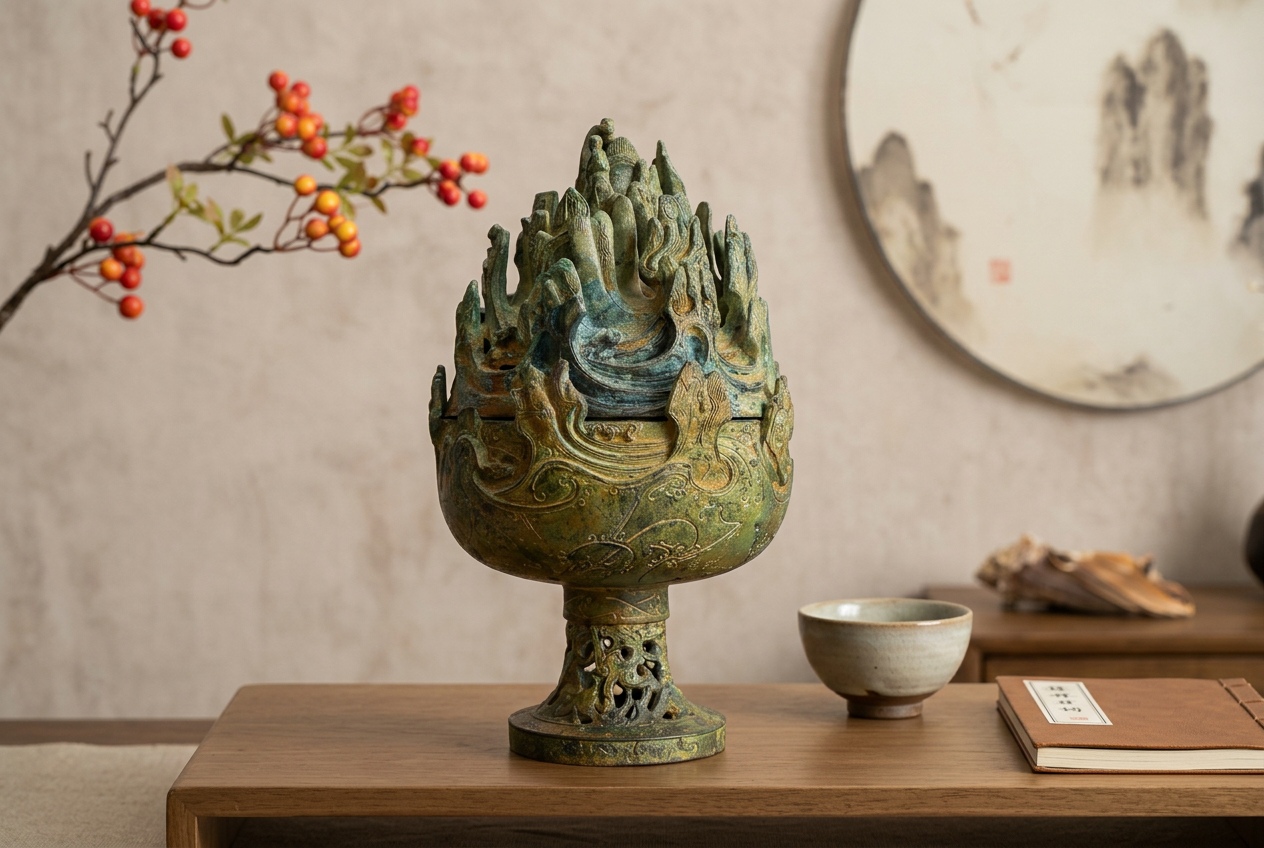
How cultural objects differ from ordinary accessories
Hospitality design products are often evaluated inside a larger story about place, guest experience and material atmosphere. A cultural display object carries more than a colour accent: its outline, historical reference and wording can affect how a client understands the room. That makes product selection and description part of the design review.
CCLYF supplies a focused group of modern Chinese bronze reproductions for display, gifting, tea spaces and hospitality contexts. This page is a sourcing guide, not a full-service interior design studio, FF&E certification statement or engineering service.
Screen type, scale, visual weight and surface
Begin with the intended display location and viewing distance. A lidded incense burner may create a stronger vertical focus on a shelf. A compact Jue cup can work in a cabinet, study-like lounge or retail display where guests can see its posts, spout and legs at close range. A gift box introduces a second visual layer: the object and the presentation need to be reviewed together.
Compare the bronze incense burner series, bronze Jue cup series and gift sets series. Ask how the selected silhouette will read against the proposed shelf depth, cabinet opening or reception surface. Avoid treating a scene image as evidence of exact size or package contents.
Where each object family can be placed
Incense burner forms can suit entrance consoles, reception shelves, tea areas and display cabinets when the object is presented as a cultural display piece. Jue cup forms can suit close-view shelves, boutique retail displays and guest-facing cultural corners. Gift Set directions can support a retail or welcome-gifting moment where label text and protective packing are part of the design brief.
For broader scene context, see hotels and tea spaces. A product reference such as the miniature bronze incense burner can help a team discuss scale, but current product facts should be confirmed from the product page and inquiry.
What to confirm before a quote
Project buyers should collect the product or series link, product reference if available, quantity by location, destination country, intended use and desired confirmation date. Add sample-photo needs, visible dimensions, surface direction, packaging questions and any label or insert wording. If the object will be handled by guests, say so; if it will stay behind glass, say that too.
The materials and craftsmanship page can explain the kind of questions to ask, while the reproduction policy helps keep client-facing copy accurate. Neither page should be read as a project-specific promise about material, packaging, capacity or delivery.
Use modern reproduction wording in project documents
CCLYF products are modern reproductions made today. They can be described as modern Chinese bronze reproductions or cultural display objects inspired by Chinese bronze vessel forms. They should not be described as historical originals, historical-origin claims, dynasty originals, museum-provenanced pieces or authenticated historical artifacts.
This distinction is especially important when an interior design team prepares a mood board, specification note or client presentation. A clear description protects the design concept from unsupported provenance claims and keeps the procurement conversation tied to visible product evidence.
From selection to a small-batch project conversation
Once the short list is ready, send the selected links, intended locations, quantity range, destination, sample-photo requirements, packaging questions and timeline flexibility. Explain which details are fixed for design approval and which can remain open until quote. This gives a supplier conversation a useful shape without pretending that unconfirmed project facts are already settled.
For the buyer path, review interior designers and hospitality buyers, then use Discuss an Interior Design Project. CCLYF can keep the reproduction boundary clear while confirming the specific product questions in the inquiry.
Keep approval language aligned across the team
Design, purchasing and client-facing teams should use the same product name and reproduction wording once an object enters a shortlist. Record which dimensions are published, which images are current references and which questions remain open. This prevents a concept image from becoming an accidental specification and gives the final buyer a cleaner approval trail.
For a small hospitality project, a short shared checklist is often enough: selected object, location, quantity, destination, sample-photo need, surface direction, package question and quote contact.