Quick answer: how do you use animal-form bronze vessels in interior design?
Use an animal-form bronze vessel as one deliberate focal object. Start with the room, viewing distance and available surface. Then choose a silhouette that can be read from that position, leave enough space around the outline and keep nearby materials quiet enough for the form to remain visible.
These objects work best when the design conversation stays specific. Use a low form for a shelf or tea table, a taller profile for a console or study, or a broader grounded form for a hospitality display. The goal is not to fill a room with themed objects. It is to give one carefully chosen piece a clear visual role.
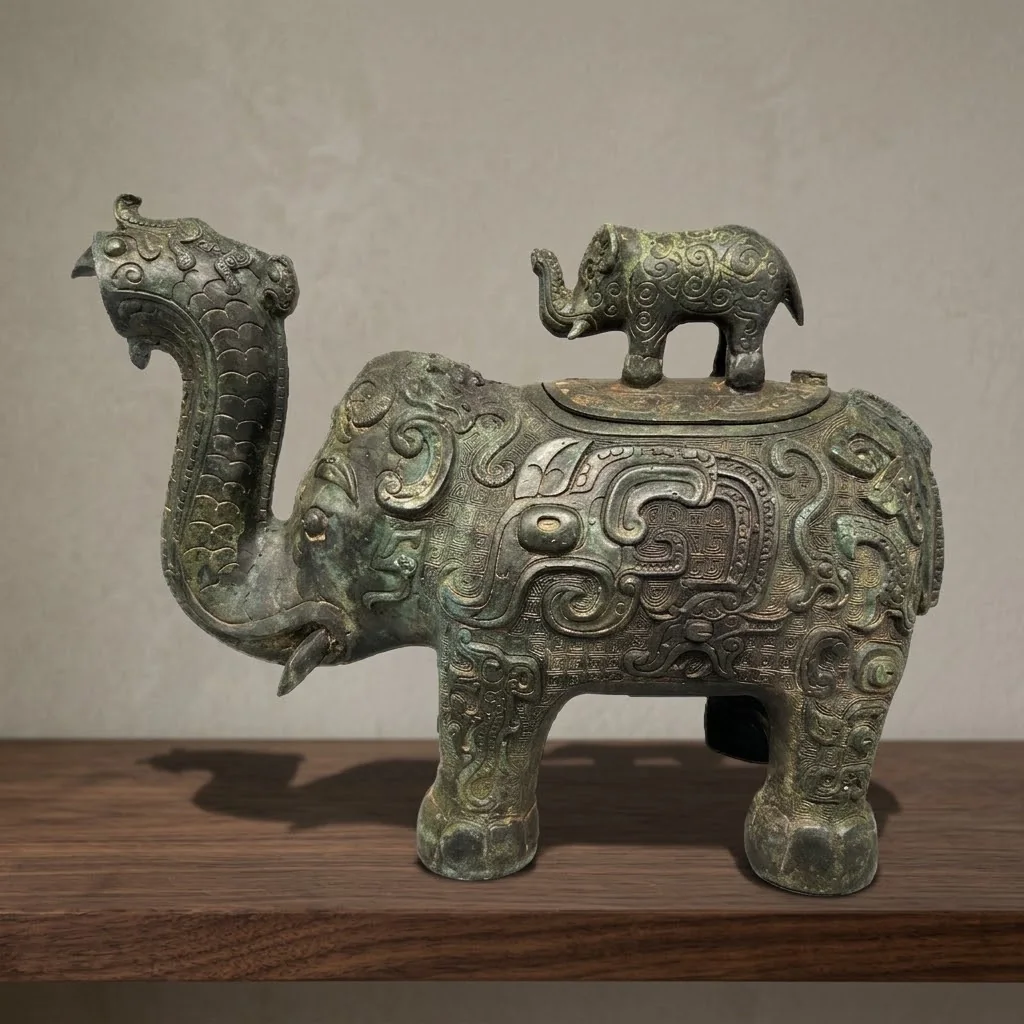
Important boundary: CCLYF presents modern animal-form bronze vessel reproductions made today. The concept visuals in this guide support form and display discussion only. They do not prove final material, dimensions, weight, packaging, production details or historical identity.
Why animal-form bronze decor can anchor a room
Animal-shaped bronze decor combines a recognizable outline with the visual weight of a vessel-like object. That gives an interior designer more to work with than a generic ornament: the silhouette can establish a focal point, while the surface and relief can reward closer viewing.
The strongest placement usually gives the object one job. It may mark the end of an entryway console. It can bring a cultural accent to a study shelf, add a point of interest to a tea space or provide a conversation object in a hotel lounge. A clear role makes the object feel intentional rather than crowded.
For a broader approach to display, read How to Display Chinese Bronze Reproductions. That guide covers scale, background, lighting and handling across the wider CCLYF product range.
Choose the form by room, scale and viewing distance
Do not begin with the animal name alone. Begin with the visual problem the room needs to solve. A compact object may work well where people can approach it. A broad or upright object may be easier to read from a reception area or the opposite side of a room.
| Interior setting | Useful visual role | Form direction to consider | Confirm before ordering |
|---|---|---|---|
| Entryway or console | A single welcome-point object with a readable outline. | Upright or medium-height animal form with breathing room around the body. | Current size, footprint, viewing angle and surface direction. |
| Study, library or office | A close-view object that rewards detail without taking over the desk or shelf. | Compact rabbit, owl or elephant direction, depending on the available surface. | Actual dimensions, base stability, relief visibility and intended placement. |
| Tea room or tea table | A quiet cultural accent beside wood, stone, linen or neutral ceramics. | Low, rounded or balanced forms that remain legible beside tea tools. | Whether the object is display-only, plus size, finish and handling needs. |
| Hotel, lounge or showroom | A stronger focal object that can be understood from more than one distance. | Broader rhinoceros, bird or deer directions with enough surrounding space. | Viewing distance, guest access, protection, quantity and packing requirements. |
Four practical placement ideas
1. Make an entryway console feel considered
An entryway usually needs one clear visual pause rather than many small decorations. Place the animal-form bronze vessel off the centerline if the console also carries a lamp, bowl or artwork. Keep the object visible from the approach and avoid hiding the head, lid, tail or support structure behind taller accessories.
A vertical deer or bird direction may suit a taller console, while a rounded elephant or rabbit direction can work better on a lower surface. The correct choice depends on the current sample and the actual height of the furniture.
2. Use a study or library shelf for close viewing
Bookshelves and studies offer a useful setting for animal-shaped bronze decor because the viewer can approach the piece. Leave a quiet zone around it instead of placing it between objects with equally complex silhouettes. Wood, matte stone, linen and neutral paper can provide a calm background for raised relief and surface tone.
For a compact reading object, compare the Rabbit-Form Bronze Vessel Reproduction and Owl-Form Bronze Vessel Reproduction. These links show current product directions; they should not be read as guarantees about unconfirmed size, material or commercial availability.
3. Add a cultural accent to a tea room
A tea room benefits from restraint. Pair one animal-form bronze vessel with quiet wood, stone, ceramics or a tray, and keep the nearby arrangement low enough that the silhouette remains visible. The object can act as a cultural conversation point without making an unverified age or provenance claim.
Use the tea room decor guide for wider placement ideas, then compare the Bird-Form Bronze Vessel Reproduction or Double-Ram Bronze Vessel Reproduction as current form directions.
4. Give hospitality displays a readable focal point
In a hotel lounge, boutique or cultural showroom, guests may see the object from several metres away and then approach it. Select a form with a silhouette that remains distinct at the first viewing distance. Place it where staff can protect it and where the surrounding lighting does not create glare that hides the surface.
The interior designers buyer guide and hotels and tea spaces buyer guide help turn this scene decision into a project brief.
Match the object with the room without over-styling it
Animal-form bronze vessels already carry a strong outline. The surrounding materials should support that outline instead of competing with it. Dark wood can deepen the sense of weight, light mineral surfaces can separate a darker finish, and linen or matte ceramics can soften a more detailed arrangement.
Lighting should reveal the form gradually. Soft side light can show relief, openings, feet and the relationship between the animal body and vessel structure. A hard spotlight may create bright reflections or deep shadows that make the object look flatter than it is.
Keep the display group small. One vessel, one simple base or tray and one or two quiet supporting objects are often enough. Do not use a concept image as a promise that a final product will match every background, color or reflection shown in the scene.


Animal-form bronze vessels and bronze animal sculptures are not the same thing
A vessel-style object and a bronze animal sculpture may share an animal outline, but their design conversations are different. A vessel-form piece is discussed through its body, opening, lid, support structure and display role. A sculpture is usually discussed primarily through its three-dimensional animal figure.
For a buyer, this distinction helps prevent the wrong brief. If the project needs a decorative object with a vessel-like body, say so clearly. If the project needs a freestanding animal figure with no vessel function, that is a different product direction and should not be assumed from a concept image.
CCLYF uses the term animal-form bronze vessel for the current series because the pages are organized around vessel-style forms presented as modern display objects. See the Animal-Form Bronze Vessels series for the current range.
Current animal-form directions to compare
The current series includes seven modern product directions. Use the product pages to compare visible silhouette and prepare a specific inquiry, while remembering that sample-level commercial details still require confirmation.
What to include in an interior design inquiry
A useful request does not need to be long. It needs to give the supplier enough context to confirm the right sample and the details that matter for the room.
- Room and placement: entryway, study, tea room, hotel, showroom or another setting.
- Viewing distance: close shelf viewing, console distance or a larger hospitality space.
- Preferred silhouette: compact, upright, rounded, broad or another visible direction.
- Project quantity: one reference piece, a small batch or a larger project quantity.
- Destination and protection: destination country, guest access, display protection and packaging questions.
- Confirmation needs: current sample photos, size, material, finish and packing details.
Do not assume that a scene photograph confirms exact dimensions, weight, price, MOQ, inventory, delivery timing or packaging. The Chinese bronze decor sourcing guide explains the wider quote-stage checklist.
Frequently asked questions
Are animal-form bronze vessels suitable for modern interiors?
They can be used as modern display objects in homes, studies, tea rooms, hospitality settings and cultural spaces. The best choice depends on scale, viewing distance, surrounding materials and the role the object needs to play.
How do I choose a bronze statement piece for an entryway?
Start with the console height and the approach view. Choose a silhouette that remains readable, leave space around the object and confirm the current sample size before final placement.
Can I use an animal-form bronze vessel on a tea table?
Yes, as a display object when the placement suits the room and the selected piece is stable. Do not assume that a modern reproduction is intended to hold liquid or to be used in a way that has not been confirmed.
What is the difference between animal-form bronze decor and an animal sculpture?
Animal-form bronze decor in this series is organized around a vessel-style body, opening, lid or support structure. A sculpture is usually organized around the animal figure itself. State which type your project requires before requesting a quote.
Are the images on this page final product photos?
No. The images are AI-generated concept visuals based on an authorized reference direction. They are for form and display discussion only, not evidence of final material, dimensions, packaging or production details.
Related reading
For a general display framework, read How to Display Chinese Bronze Reproductions. For buyer wording and current-product boundaries, read Modern Reproduction Clarity. For a project that needs several models, visit the interior designers buyer path or the animal-form bronze vessel series.
Source note: This guide uses current CCLYF product-page facts and general interior styling principles. Product-specific material, dimensions, finish, packaging and supply details must be confirmed from the selected sample and quote.