
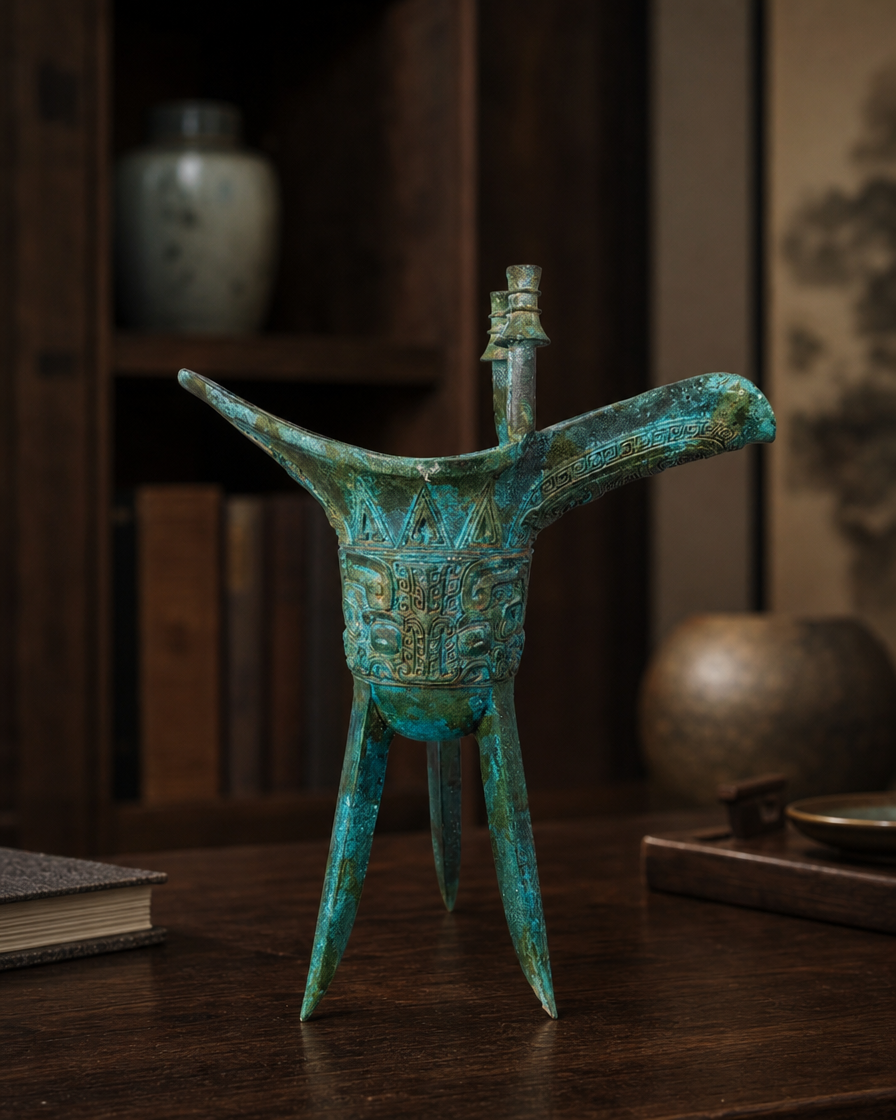
Start with scale
A small Jue cup or incense burner should have enough breathing room to read as an object, not a prop. Use books, trays or shelves as scale references, but keep the complete silhouette visible.
If the display image is generated or staged from a source product photo, it should not invent the back, top or hidden motifs. The product page remains the evidence source.
Choose a calm surface
Wood, mineral-white stone, dark gray shelves and tea-room surfaces all work when they support the object rather than compete with it. Avoid busy backgrounds that hide legs, handles or rim details.
Soft window light usually shows bronze-green and darker patina tones better than hard spotlighting. The goal is a believable room, not a fantasy museum effect.
Make it useful for buyers
A good scene image should answer practical questions: approximate scale, how the object sits, whether the silhouette is stable and what kind of setting it suits.