What is a Jue cup? A concise definition
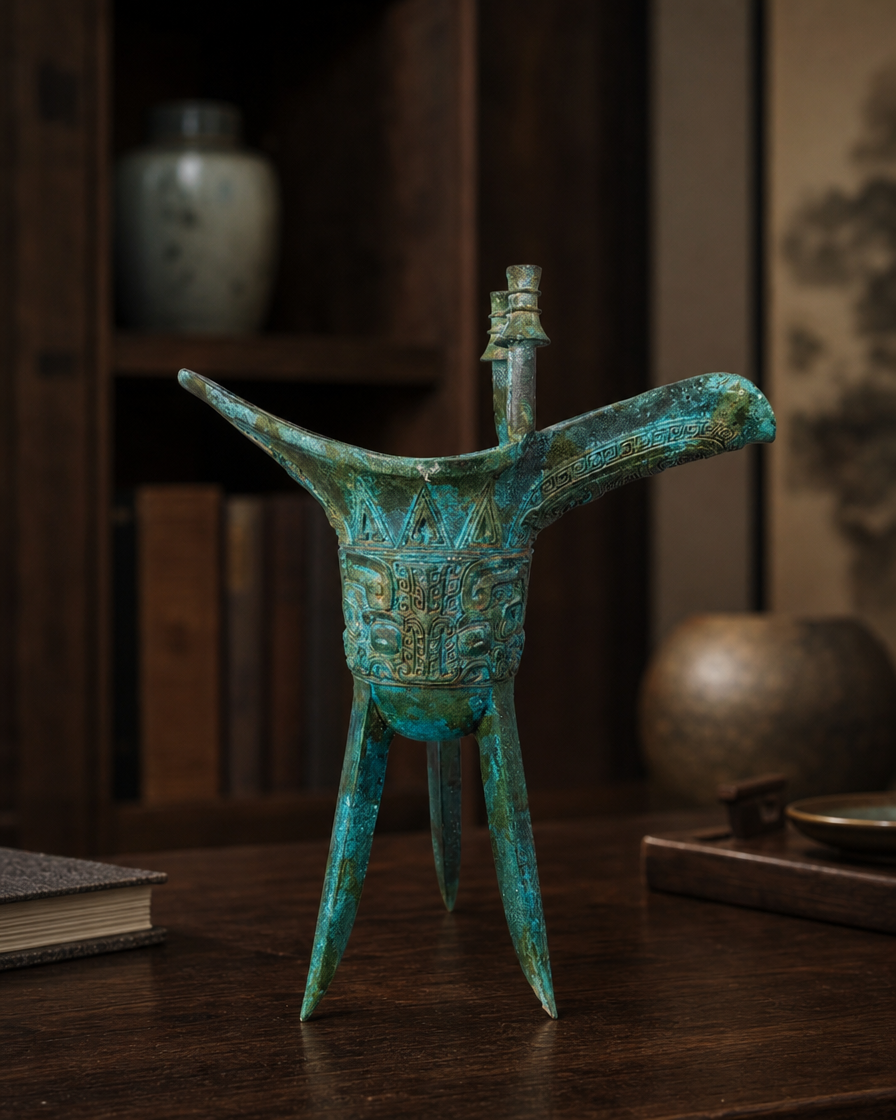
A Jue cup is a distinctive Chinese bronze wine vessel form with a raised body, three legs, a long pouring spout, rear tail, side handle and upright posts near the rim in many examples. In simple terms, it is a recognizable vessel shape from Chinese bronze culture; modern reproductions can vary in size, finish and detail.
On CCLYF, a Chinese bronze Jue cup is presented as a modern reproduction made today for display, gifting and sourcing conversations. We do not present site products as historical originals or museum-provenanced objects. When a buyer asks about a bronze ritual vessel reproduction, the practical next step is to confirm the current sample, visible form details and quote-stage commercial information.
Why buyers call it a Chinese bronze wine vessel
Some buyers know the Chinese name Jue, while others search for a bronze wine vessel, Chinese bronze wine vessel or Chinese ritual wine vessel. CCLYF can use all of these terms to make the form easier to understand, but the wording stays descriptive and educational. It is not an age, dynasty or provenance claim.
For sourcing, ask whether the buyer needs a modern bronze reproduction for display, desk use, cultural gift, retail object or small-batch quote, then confirm wording, dimensions, finish, packaging and intended use.
What buyers notice in the Jue form
The first feature is the tripod stance. Three legs lift the body and create the sculptural profile many people associate with the Jue vessel. The second is the long spout, often balanced by a rear tail or rear extension. Together, these elements make the vessel feel directional rather than bowl-like.
The upright posts near the rim are another feature buyers often ask about. On some modern reproductions they are prominent; on others they are simplified. A side handle gives the body another visual anchor. Around the body, buyers may see motif zones, raised bands, surface patterning, aged-style finish or color variation. These details should be checked from actual sample photos rather than assumed from the product name.
Because modern Chinese bronze reproduction pieces can differ by workshop sample, CCLYF keeps the language conservative. We describe visible features and then confirm anything commercial before quote: Size confirmed before quote, Material confirmed before order, Packaging confirmed before quote and Sample photos available before order.
Why Jue cups matter in Chinese bronze culture
The Jue form is important because it belongs to the visual vocabulary of early Chinese bronze vessels. Its three-legged structure, spout, posts and handle make it easy to distinguish from broader bowls, vases or incense objects. Even for non-specialist buyers, the silhouette communicates Chinese bronze culture quickly and clearly. To compare the Jue with other common forms such as ding, zun, gu, gui, hu and dou, see the Chinese bronze vessel types guide. For a focused explanation of the Zun category, continue to What Is a Chinese Bronze Zun?.
That cultural recognition is one reason modern Jue reproductions remain useful today. A Jue cup can work as a study object, a shelf display or a symbolic cultural gift. It can also serve as a museum-shop style object, tea-room accent or interior design reference. The object carries a form language, not a claim that the current product is old or institution-sourced.
For SEO and buyer education, this distinction matters. A page can explain Chinese bronze culture and still keep product claims clean. CCLYF avoids unverified historical-origin claims and focuses on modern reproductions made today, photographed sample references and clear quote preparation.
Further reading on Chinese bronze vessels
For historical context, compare the form with collection and teaching resources from established museums and art-education organizations:
Modern reproduction clarity
A modern Jue reproduction is not sold here as a documented historic object. It is a contemporary object inspired by a well-known vessel form. That makes it suitable for buyers who want the look, symbolism and decorative presence of a Chinese bronze vessel without asking the site to make unsupported origin claims.
This boundary protects buyers. The useful questions are practical: Which sample is being quoted? What is the size, material status, visible finish, packing plan and destination? Those answers belong in the quote conversation.
How buyers use Jue reproductions today
Collectors may use a bronze Jue cup reproduction as a compact display object for a desk, shelf or cabinet. Museum shops and cultural gift buyers may consider Jue forms when they need objects that communicate Chinese bronze culture in a clear and recognizable way. Interior designers may use Jue silhouettes in libraries, tea rooms, hotel lounges or refined display corners.
Wholesalers and small-batch buyers usually need a different level of detail. They may compare several Jue directions, ask for current sample photos, confirm packaging and request quote information by quantity and destination. For these buyers, the best path is to start from the Bronze Jue Cup Series, review available model directions, check the small-batch bronze reproduction sourcing route and then send a structured inquiry. If the intended use is business gifting, continue to the Chinese cultural gifts for business buyers page.
What to confirm before quote
Before requesting a bronze Jue cup quote, collect the basics: product page or model direction, quantity, destination country, intended use, desired timeline and any custom size, finish or packaging requirements. If the object will be used for a gift program, note whether a gift presentation discussion is needed. If it will be used in a display project, describe the display environment.
For the product itself, ask for sample photos and confirm the full silhouette, handle, posts, legs, spout, visible surface tone and any motif zones. For order planning, confirm size, material, finish, packaging and destination. Packaging confirmed before quote is especially important for gift, hospitality and international shipping discussions.
Related CCLYF Jue products and pages
Start with the bronze Jue cup reproductions series, then use the Verdigris Twin-Post Bronze Jue Cup for a detailed Jue reference page. For two additional model directions, compare the twin-post Jue cup with long spout and the single-post bronze Jue cup. For gift sourcing, see the Jue cup gift box set and the Chinese cultural gift sets page. For sourcing boundaries, read modern reproduction clarity and the CCLYF reproduction policy.
General buyer questions are covered in the Chinese Bronze Reproduction FAQ. If you already know the model or quantity, go directly to Request Quote and include destination, timeline and any packaging needs.