
Quick answer: what is a Chinese guardian lion?
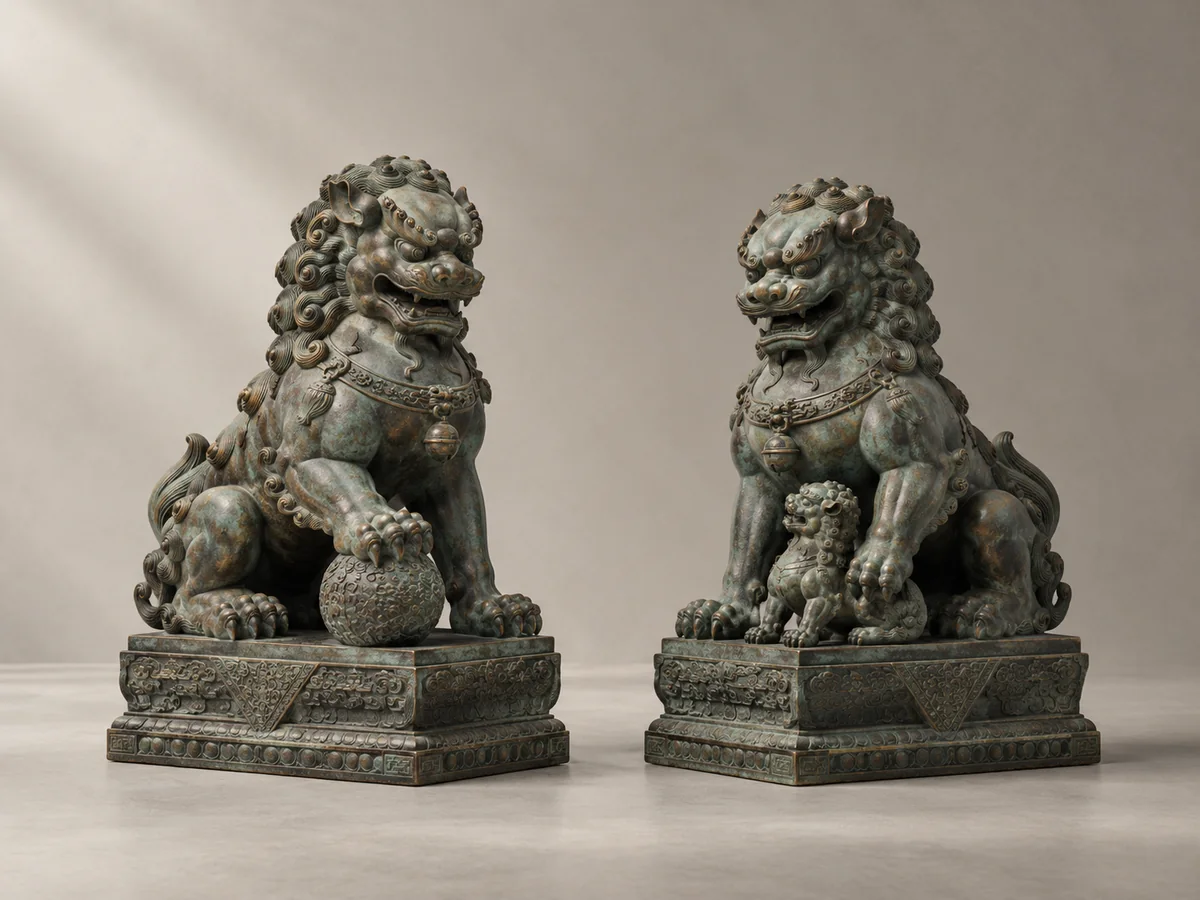
A Chinese guardian lion is a sculpted lion figure associated in many documented settings with guarding an entrance or marking an important place. English-language searches often call these figures Foo Dogs or Fu Dogs, but that nickname does not identify a specific historical object. A figure's meaning depends on its documented context, period, location and visible features; a ball, cub, open mouth or elaborate mane is not a universal code.
For buyers, the useful first distinction is between a historical object described by a collection record and a modern design or reproduction. CCLYF discusses modern bronze reproductions using photographs, drawings or a physical reference. The reference can guide a design conversation, while material, dimensions, weight, finish, price, minimum order and delivery timing require project-specific confirmation.
What does Chinese Foo Dog meaning refer to?
The broad protective association is tied to the use of guardian figures at entrances and formal settings, but a Chinese Foo Dog meaning should not be reduced to one promise or rule. The Metropolitan Museum of Art identifies its limestone Guardian Lion as a mid-sixth-century Northern Qi work (550-577), 65.4 cm high and one of a pair. The museum also notes paired stone lions at Han-dynasty tombs and later lion imagery in Buddhist contexts. These dates, measurements and settings describe named historical examples, not every later decorative figure.
The word "Foo Dog" is a common English search and retail label for a lion-like guardian figure. For a particular sculpture, the name used by its museum, catalogue or reliable reference is more precise. A nickname alone cannot establish a figure's date, place of origin, material or original function.
A lion placed at a tomb, a religious setting, a palace gate or a modern building entrance may share a recognizable silhouette while belonging to a different context. Claims that every pair brings wealth, guarantees protection or follows one fixed symbolic formula go beyond what an image alone can establish.
Why do some guardian lions have a ball or a cub?
Some paired guardian-lion designs show one figure with a ball and another with a cub, but these motifs should be interpreted through the specific object or source. In its account of the bronze pair at the Gate of Supreme Harmony, the Palace Museum explains the ball as representing supremacy and the cub as prosperity. That is the museum's interpretation of that named pair, not a universal identification rule.
When describing another pair, check the full arrangement, viewing direction, base and collection information before assigning roles. A ball or cub may be absent, positioned differently or used in an adapted modern design. The detail is useful to record; it does not by itself prove the figure's identity, date or provenance.
How can you describe a Chinese guardian lion statue?
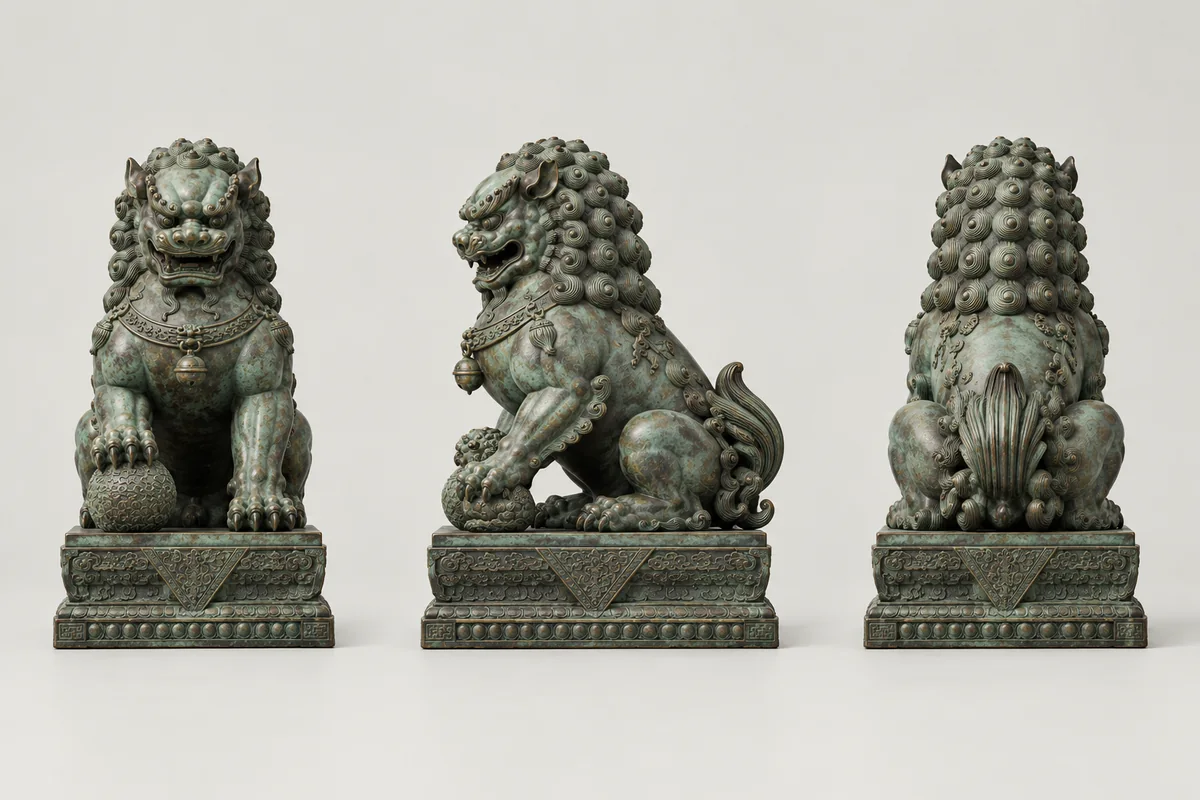
Start with the whole silhouette, then record individual details without turning them into unsupported historical claims. A Chinese guardian lion statue may show a stylized mane, broad head, open mouth, seated or standing body, strong paws, tail and a shaped base. The exact combination varies by object and design.
| Visible feature | Useful description | Not established by appearance alone |
|---|---|---|
| Head and mane | Profile, expression, curls, bands and surface detail. | Exact date, maker or historical identity. |
| Paws and objects | Whether a ball, cub or another form is visibly present and where. | A universal male/female role or symbolic meaning. |
| Body and tail | Seated, standing or crouched posture; visible body proportions. | Original architectural location or intended use. |
| Base and underside | Base shape, relief, visible joins and overall presentation. | Provenance, authenticity or unlisted construction details. |
| Surface and color | Visible tone, texture and apparent finish in the photograph. | Alloy, age, original surface or conservation history. |
The Chinese Bronze Sculpture guide distinguishes free-standing sculpture from animal-form vessels. The Chinese Bronze Vessels guide helps when a figure is part of a container rather than a separate sculpture.
Which photos help identify a guardian lion?
For a useful visual review, photograph the complete figure from the front, both sides and rear, then add close views of the head, paws, base and any inscription or label. Use even light and keep the camera far enough away to avoid distorting proportions. For a pair, include a view showing how both figures are arranged and note which one stands on each side from the intended viewing direction.
These views help someone compare visible form and prepare questions. They do not replace a collection record, specialist examination or technical analysis, and they cannot establish material, age or manufacturing details by themselves.
Were Chinese guardian lions made in bronze?
Yes, museum collections document bronze examples, although stone is strongly associated with many large architectural guardian figures. The Palace Museum describes a bronze pair at the Gate of Supreme Harmony. The Nelson-Atkins Museum of Art dates its gilt-bronze guardian lion to the Tang dynasty (618-906 CE) and catalogs it as one of a pair associated with a small Buddhist shrine.
These records establish that bronze guardian-lion examples exist; they do not show that every style was traditionally made in bronze. They also do not establish that a modern bronze figure shares the age, purpose, finish or history of a museum object. Material and date belong to the evidence for each individual object.
Are Foo Dogs the same as qilin or pixiu?
No. Guardian lion, qilin and pixiu name different figure traditions and should not be used as interchangeable product or historical labels. "Guardian animal" can be a broad visual description, but it is not a precise species identification.
If a reference is unclear, describe what can be seen first: head shape, horns or ears, body, paws or hooves, tail, wings, objects beneath the feet and base. Compare those details with a reliable source before assigning a narrower name. Similar protective roles do not make the figures the same animal.
What should buyers confirm before a bronze Foo Dog statue quote?
A bronze Foo Dog statue reference is a starting point, not a complete production specification. Before requesting a quote, separate visible design choices from the commercial and technical details that still need confirmation.
- Arrangement: Say whether the brief is for one figure or a pair, and include left/right orientation if it matters.
- Reference views: Share front, side, rear, base and detail photographs, a drawing or a reliable published object record.
- Design priorities: Identify the silhouette, mane, expression, paws, ball or cub, tail and base details that matter most.
- Display context: Describe the intended location and exposure. Do not assume that an unspecified material or finish is suitable outdoors.
- Scale and quantity: Provide a target size range and quantity if known; these remain project requirements until reviewed.
- Surface direction: Describe the visual finish you want and request current sample references before approval.
- Quote-stage details: Confirm material, exact dimensions, weight, packaging, price, minimum order, feasibility and delivery schedule for the selected design.
A photograph can communicate shape and appearance, but it cannot confirm alloy, weight, production method or commercial terms for a new object. The Bronze Casting Process guide explains general process stages and should not be read as a fixed specification for every custom project.
Can CCLYF discuss a custom bronze guardian lion?
Yes. CCLYF can discuss a modern bronze guardian-lion reproduction, including a form outside the current online directory, using photographs, drawings, a model or a physical reference as a starting point. Related guardian-animal directions can also be discussed individually; they are not automatically grouped under the Foo Dog name.
CCLYF coordinates sourcing and custom discussions with production partners. Production-side input for this guide comes from a long-established Chinese bronze partner with more than 30 years of experience across model development, casting and hand finishing. That background supports a discussion of possible directions; it does not confirm that a particular reference is feasible or that CCLYF owns the workshop.
The site presents modern reproductions made today, not certified historical originals. A historical reference can define a design direction, but it does not establish museum approval, provenance or an exact-copy scope for a new object. Material, dimensions, weight, surface, price, minimum order, packaging, availability and delivery timing must be confirmed for each project.
To start, share the reference or source link, whether you need one figure or a pair, your target size and quantity if known, the intended display setting and destination country. Continue to Custom Bronze Reproductions or send the details through Request Quote.
Frequently asked questions
Are Foo Dogs actually dogs?
Foo Dog or Fu Dog is a familiar English-language nickname. Chinese guardian figures described in museum records are identified as lions, so the nickname should not be read as a literal animal classification.
What does a Chinese guardian lion symbolize?
Protection is a broad association for guardian figures in entrance settings. More specific meanings depend on the named object, period, location and source record.
Do all guardian-lion pairs have a ball and a cub?
No. Ball-and-cub motifs appear in some documented pairs, but they are not required features of every pair. Use the documentation for the specific object.
Does bronze prove that a Foo Dog statue is historical?
No. Bronze describes a material category, not a date or provenance. A newly made figure should be described as a modern bronze reproduction unless separate evidence supports another history.
Can I ask about a guardian animal that is not shown online?
Yes. Share clear reference views and identify the animal or design direction as specifically as possible. Feasibility and quote details are reviewed for each project.
Sources and further reading
These sources describe named collection objects or their institution's interpretation. They do not automatically establish facts about another sculpture or a current reproduction.
- The Metropolitan Museum of Art: Guardian LionSpecific Northern Qi stone lion and historical context for guardian figures.
- The Palace Museum: Spot the Sacred Animals in the Imperial PalaceThe museum's account of the bronze pair at the Gate of Supreme Harmony and its interpretation of the ball and cub.
- The Nelson-Atkins Museum of Art: Guardian LionA specific Tang-dynasty gilt-bronze guardian-lion collection record.
- Chinese Bronze SculptureForm categories, symbolism limits and modern reproduction evidence.
- Bronze Casting ProcessGeneral process education, separate from product-specific specifications.