
Quick answer: how does bronze casting work?
The bronze casting process turns a planned form into a metal object by creating a pattern, forming a mold around or around parts of that pattern, introducing molten bronze into the mold and then releasing and finishing the solidified casting. A simple process summary is: reference, model, mold, metal, release, repair, finish and inspection.
For buyers researching casting bronze reproductions, the process matters because each stage can affect the visible form, surface and project checks.
The phrase bronze casting process covers more than the moment when metal is poured. The reference affects the shape, the model affects the details, the mold and core define the spaces, the pouring system affects how the cavity fills, and finishing affects what the buyer finally sees. Different objects may require different solutions.
- Define the reference, intended form and project requirements.
- Prepare a model, pattern or working master.
- Plan the mold, inner core, channels and supports.
- Build and prepare the selected mold system.
- Prepare the bronze and fill the casting cavity.
- Allow the casting to cool, then open or remove the mold.
- Cut, clean, chase, repair and assemble the casting as needed.
- Apply the selected surface treatment and inspect the finished sample.
What is included in a bronze casting process?
Bronze casting is a family of metalworking processes rather than one universal recipe. A foundry may use a sectional mold, an investment mold, a core, a reusable tool or a combination of methods. The right choice depends on the form, wall spaces, relief, openwork, undercuts, quantity, reference quality and finishing requirements.
For a modern bronze reproduction, the process also starts before the workshop. The buyer and maker need a shared understanding of the object being reproduced. A museum photograph, a drawing, a physical sample and a product brief can each communicate different information. A clear project question should identify which features matter: silhouette, ornament, openings, proportions, surface direction, approximate size or presentation use.
This is why a process page should not promise one fixed alloy percentage, pouring temperature, mold material, wall thickness, production time or minimum order quantity. Those details need to be confirmed for the actual object and order.
Bronze Casting Steps: From Reference to Finished Object
1. Define the reference and the intended object
The first step is to define what the finished object should communicate. The reference may be a supplied photograph, a drawing, a historical form, an existing sample or a combination of references. The project brief should distinguish the features that must remain recognizable from the features that can be adjusted for display, packaging or production.
For hollow vessels, the inside is part of the design even when it is not the main visual focus. Openings, lid fit, feet, handles, spouts and internal clearances can affect the model, core and casting plan. A useful reference pack therefore includes several views and any confirmed measurements rather than relying on one cropped image.
2. Prepare a model, pattern or working master
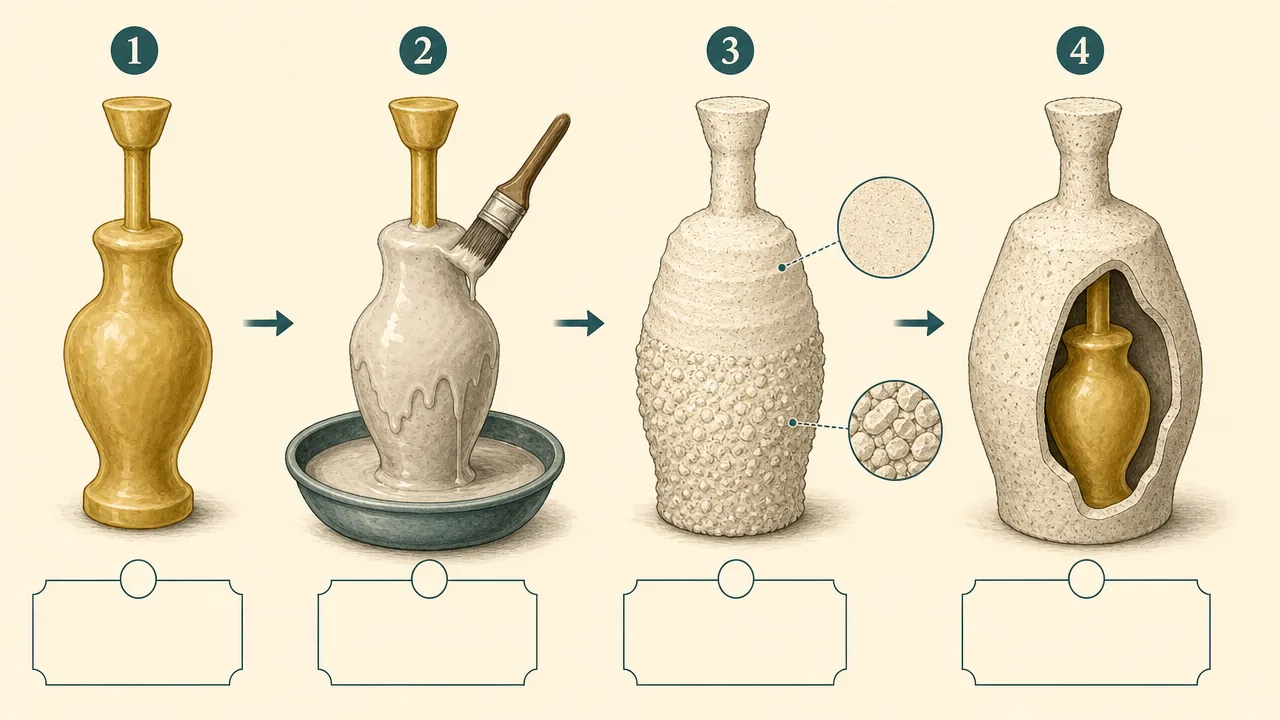
A model establishes the form that the mold will reproduce. Depending on the project, a pattern may be prepared in wax, clay, resin, wood or another material suitable for the selected casting route. The model can be shaped as one piece or divided into sections where the object, mold or finishing plan requires it.
At this stage, surface relief, edges, openings and attachment points are checked before metal is involved. Small changes in the model can influence the final silhouette and the amount of later chasing. For a reproduction, the goal is not simply to make a similar-looking object; it is to decide which visible and functional details need to be carried into the working pattern.
3. Plan the mold, core and metal-flow system
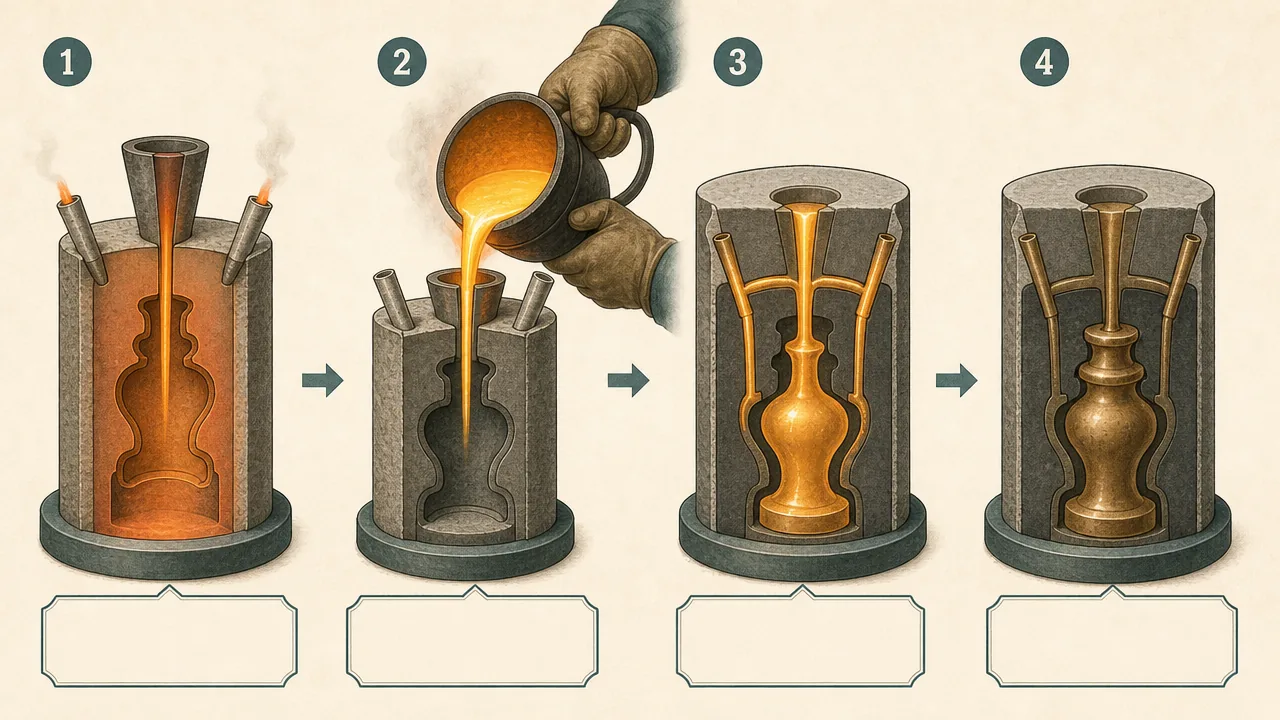
The mold defines the outside of the object, while a core can define an internal cavity. Sprues, runners, gates, vents and risers may be planned to guide the metal and manage the filling of the cavity. Their arrangement is part of the casting design, not an afterthought.
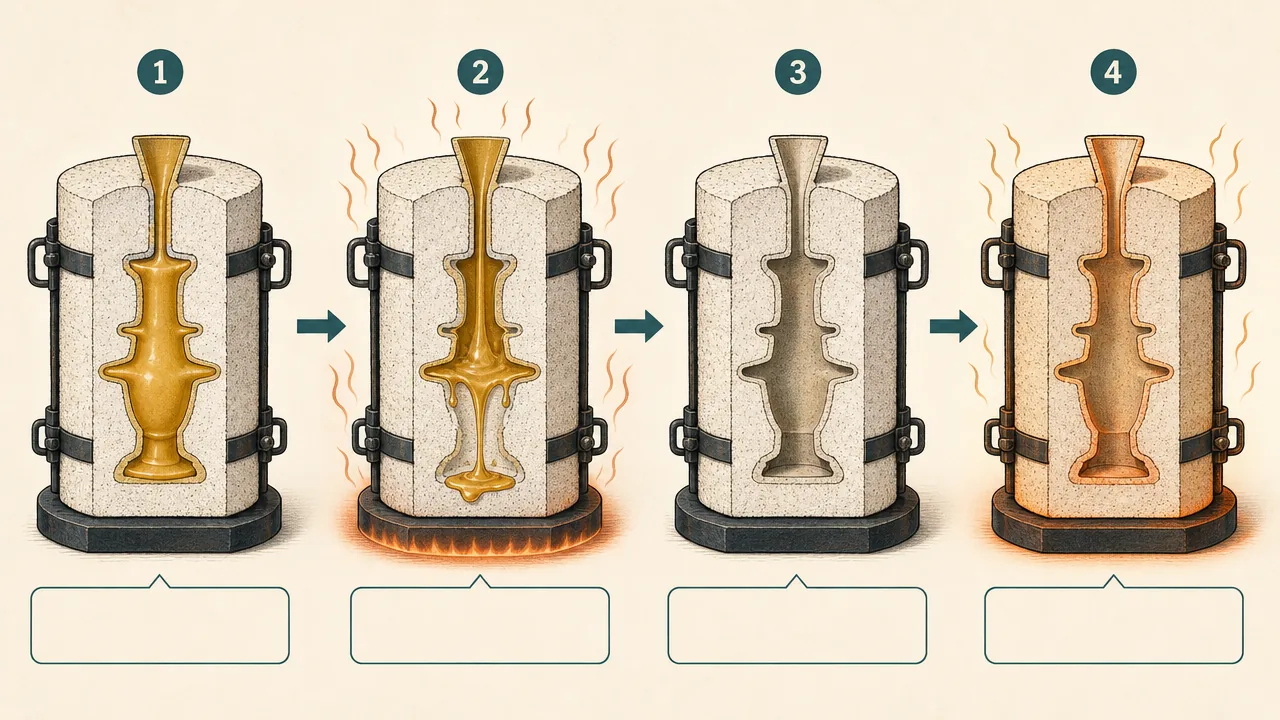
Two process families often appear in bronze research. In piece mold casting, fitted mold sections and an inner core help define the form. In lost-wax casting, a temporary wax pattern is enclosed in an investment mold and removed to create the cavity. These pages explain those methods in more detail. Neither process name alone proves historical accuracy or guarantees a particular finish.
4. Build and prepare the mold
The selected mold must hold the intended shape while the metal enters the cavity. A sectional mold may be assembled from fitted parts. An investment or ceramic shell may be built in layers around a temporary pattern and later sacrificed. Other projects may use a different tooling system.
Whatever the route, the mold needs to be handled, dried or otherwise prepared according to its material system. The important public lesson is that mold strength, cavity detail, core position and channel design all influence the result. A general article should not turn one workshop's materials or sequence into a universal bronze foundry standard.
5. Prepare the bronze and fill the cavity
Bronze is heated until it can flow into the prepared mold. The metal then travels through the planned entry and channel system to fill the cavity. The relevant conditions depend on the alloy or material specification, object geometry, mold, equipment and production controls.
For buyers, the useful question is not only whether a supplier says “bronze casting.” Ask which material description applies to the selected object, whether a current sample is available, and which visible specifications can be confirmed. A public page should not invent a fixed composition, temperature, pressure or machine specification when the project record does not establish it.
6. Cool, open or remove the mold
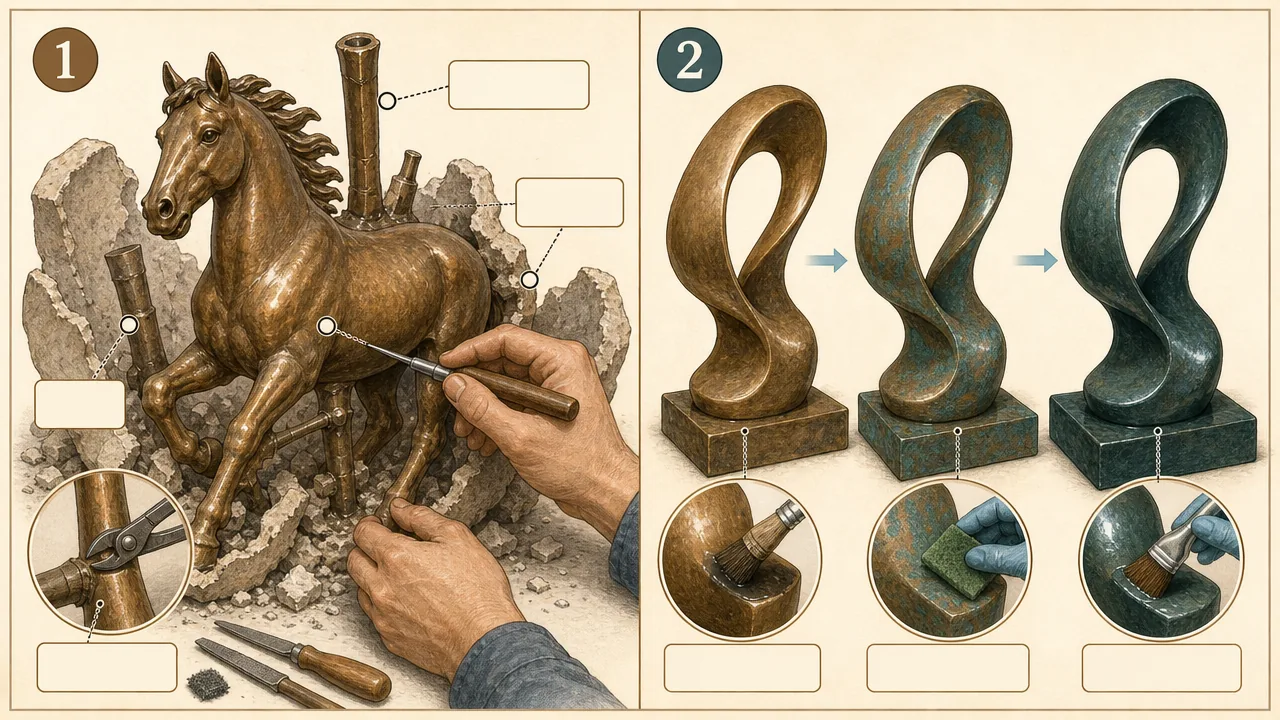
After the metal has solidified, the casting is released from the mold. A reusable sectional mold can be opened. A sacrificial investment mold is broken away. Core material, gates, sprues, vents and other temporary elements may need to be removed or cleaned from the object.
The first casting out of the mold is not automatically the final display piece. It is a metal version of the pattern that still needs inspection and finishing. This distinction helps buyers understand why a quote may include model work, sample approval, repair, surface treatment and packing rather than only a single “casting” step.
7. Clean, chase, repair and assemble
Cleanup can include removing gates, runners, mold residue and core material. Chasing restores or clarifies edges, relief and other surface details. Selected areas may be filed, ground, welded, repaired or polished. If the object was made in several sections, joining and alignment may also be part of the work.
These operations can change what is visible on the surface. A seam, parting line or repaired area should therefore be considered together with the model, mold strategy and finishing plan. For a buyer reviewing photographs, multiple views and a current sample are more useful than a process label without visual evidence.
8. Apply patina or another surface treatment
Surface treatment gives the casting its final visual direction. It may involve polishing, controlled coloration, a patina, wax or another protective treatment. The appearance can depend on the base surface, the selected chemicals or coatings, application technique, lighting and later care.
Read the bronze patina finish guide for a closer explanation of patina, color direction and buyer checks. A modern aged finish should be described as a finish or surface treatment. It should not be used as evidence that an object is an old or authenticated historical original.
9. Inspect the sample and prepare the order
Before an order moves forward, the selected sample or production reference should be checked against the agreed project brief. Useful checks include silhouette, visible details, approximate dimensions, lid or part fit, surface direction, sharp edges, openings, stability and the way the object will be packed.
This final step connects the bronze casting process to a real buying decision. A buyer may need a product photo, a reference image, a size range, a quantity, a destination country, a timeline and intended use before a practical quote can be prepared. Some details may remain subject to confirmation after the sample or production version is reviewed.
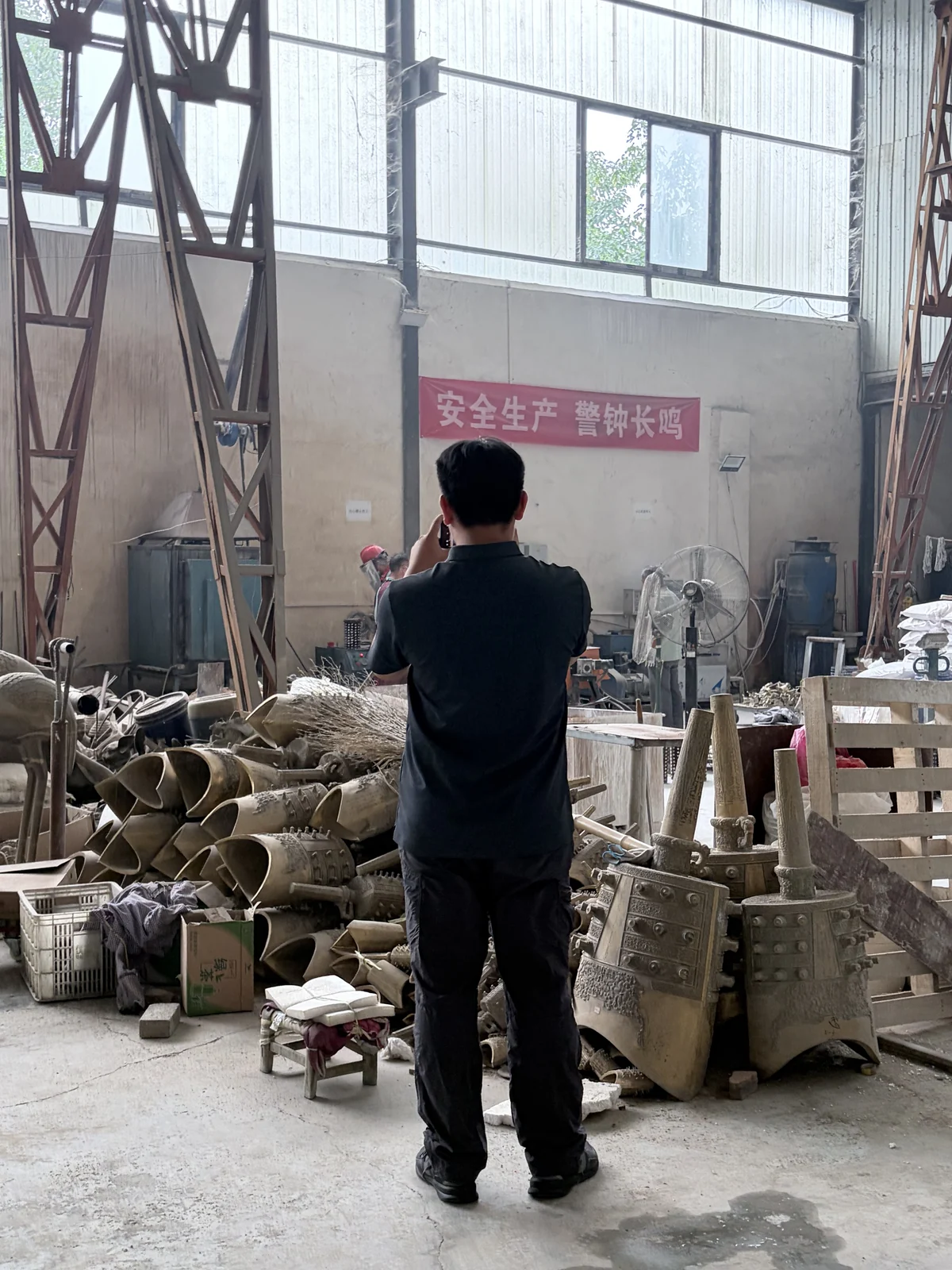
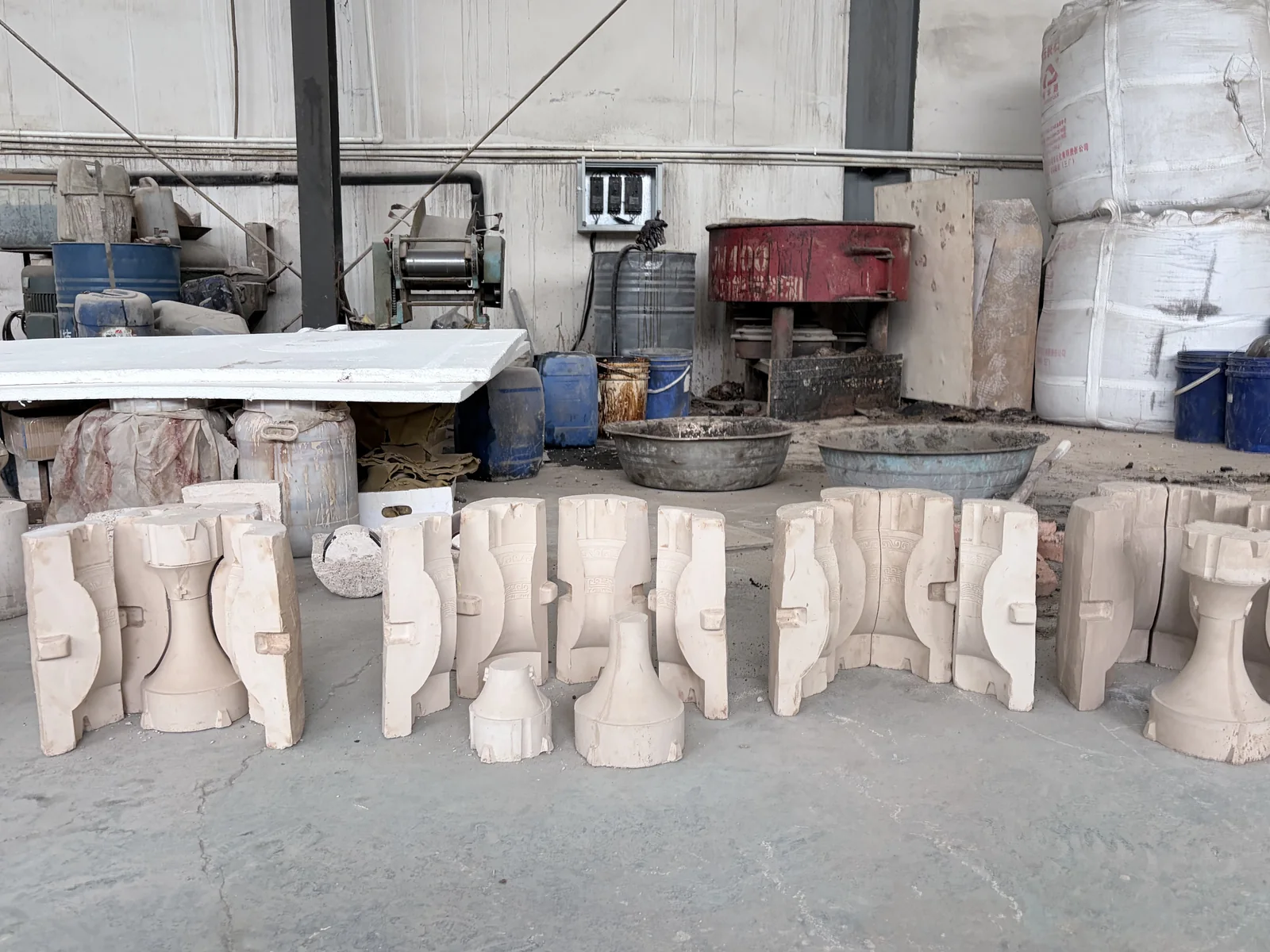
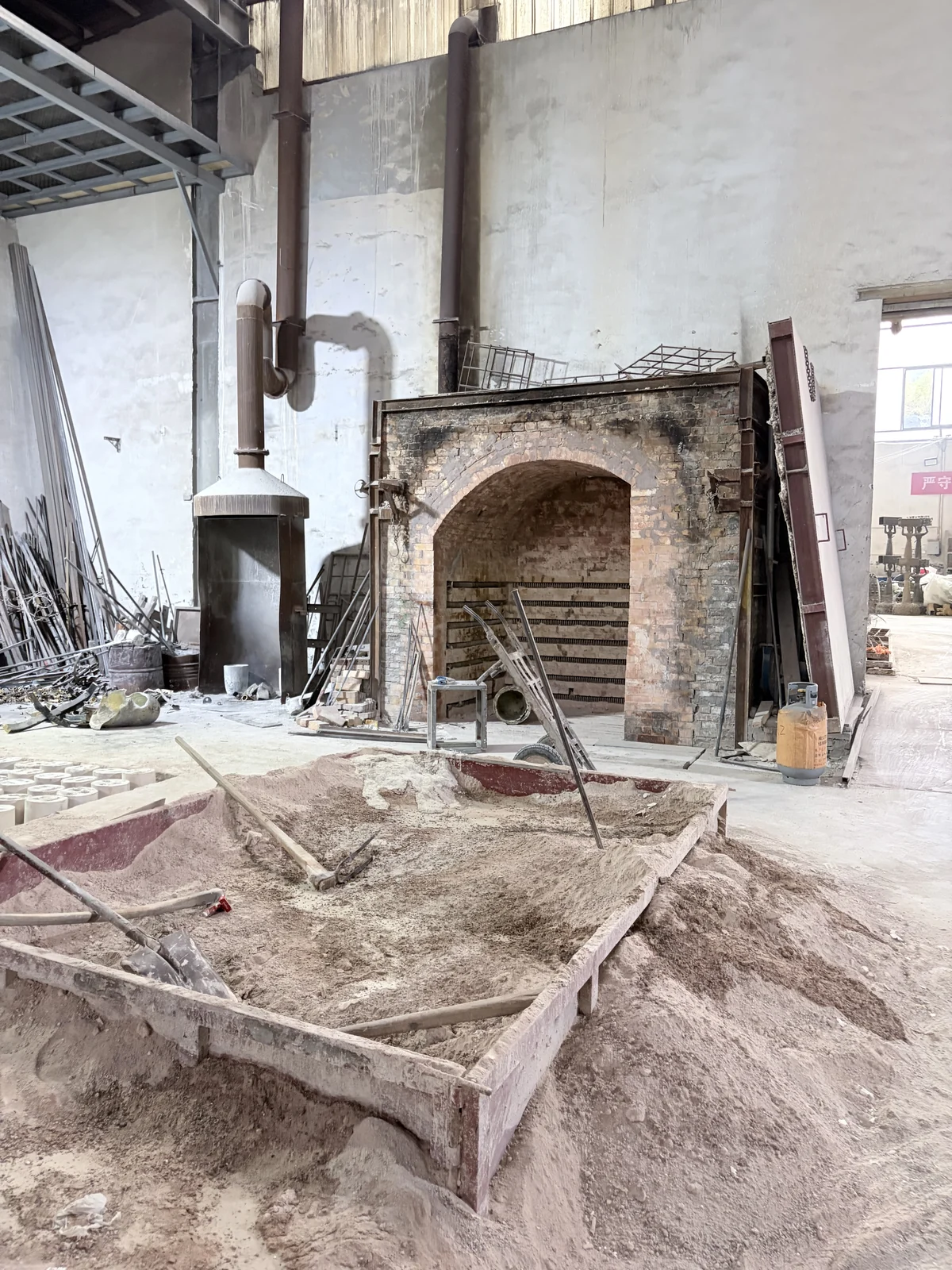
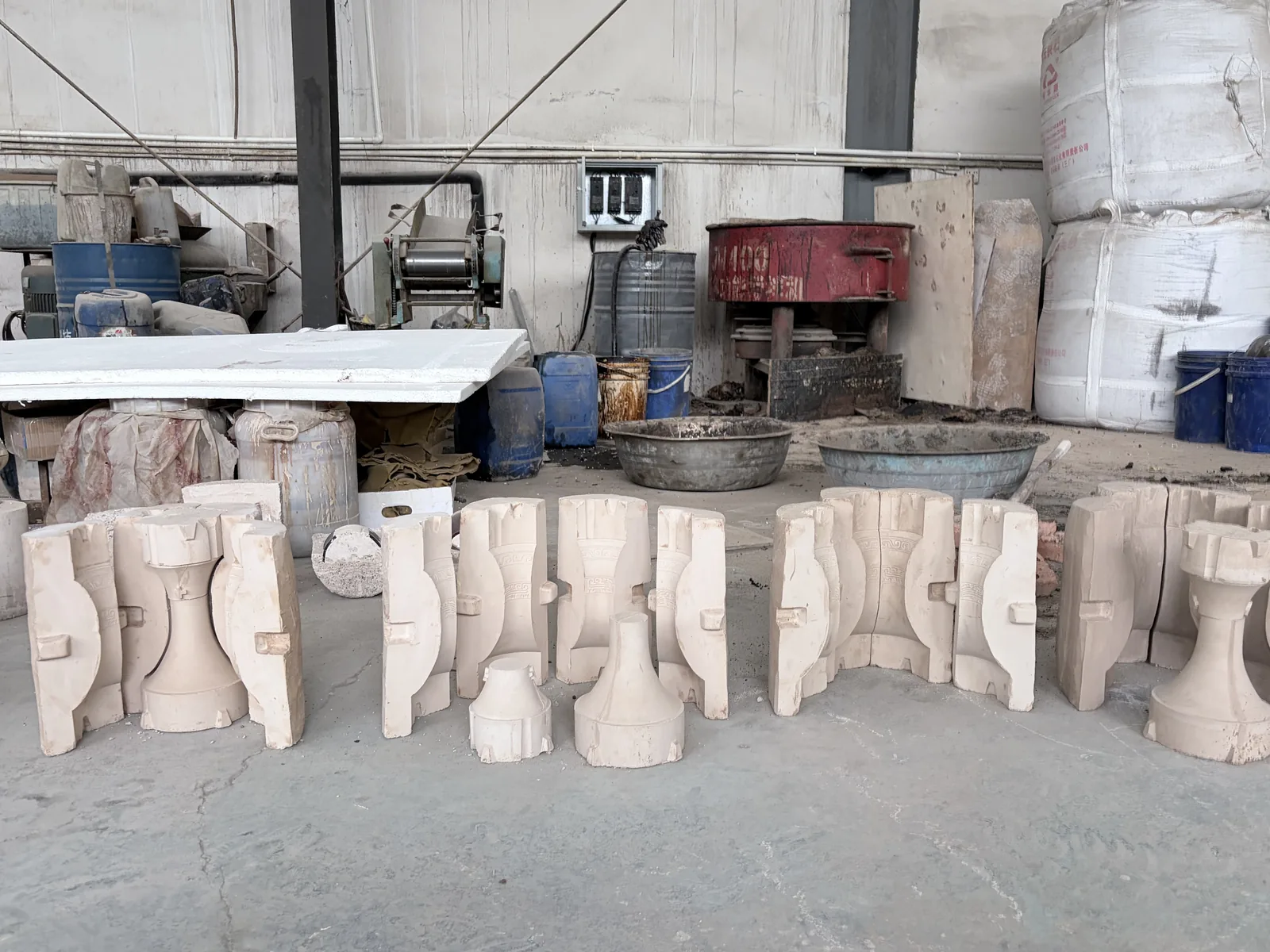
Workshop Visit Evidence
Observed workshop evidence: The photos and short video below record a factory visit and the visible production surroundings at that time. They help explain the kinds of equipment, mold forms and work areas a buyer may encounter during a production-side review.
They do not prove that every CCLYF product uses the same mold system, equipment, material specification, casting sequence or finishing parameters. Product-specific process details and commercial terms are confirmed case by case.
Piece mold casting, lost-wax casting and modern reproduction work
Historical Chinese bronzes are discussed through archaeological evidence, technical examination and museum documentation. Modern reproductions are current objects made from a reference or design brief. These are related subjects, but they are not interchangeable.
The piece mold casting guide focuses on fitted sections, cores and the historical process question. The lost-wax guide focuses on the temporary wax pattern, refractory mold, burnout and finishing sequence. This overview connects the steps without claiming that all historical vessels or all current products used one method.
When a buyer needs a modern reproduction, the reference, visible form, scale, finish and intended use usually matter more than repeating a process name. If a specific casting route is important to the project, ask for that detail to be confirmed for the selected object rather than inferring it from a similar product or a historical image.
Does the casting method determine quality?
No. A casting method is one part of the production chain. The result also depends on the reference, model accuracy, mold and core design, metal specification, filling behavior, cooling, cleanup, repair, surface finishing and inspection. A process name should not be treated as an automatic guarantee of quality, historical accuracy or suitability for a particular interior.
For this reason, buyers comparing modern bronze reproductions should ask for evidence that matches the decision they need to make. A close detail photo may help with relief and finish. Several angles may help with silhouette. A measurement may help with placement. A sample may help with color and surface direction. The useful evidence depends on the project.
Buyer checklist for a bronze reproduction project
Before requesting a quote, organize the questions that affect the casting and finishing plan:
| Project question | Why it matters |
|---|---|
| What is the reference? | Photos, drawings, a sample or a named form may communicate different details. |
| Which features must remain recognizable? | Silhouette, relief, openings, lid fit and attachments may need different attention. |
| Is the object hollow or assembled? | Internal space, cores, joins and access points affect the process plan. |
| What size and quantity are needed? | Scale and repeat quantity can affect model, tooling, sample and packing decisions. |
| Which surface direction is wanted? | Polished, dark, colored, patinated or aged-looking finishes should be discussed from a current sample. |
| What is the intended use? | Display, hospitality, cultural gifting and retail presentation can require different checks. |
| Where will the order go? | Destination, packaging and handling requirements belong in the quote conversation. |
For a starting point, see custom bronze reproductions and include the reference, quantity, destination, intended use and any size, finish or packaging requirements. When the object is known, a structured inquiry through Request a Quote makes the next confirmation step clearer.
Common questions about bronze casting
What are the main bronze casting steps?
The main steps are reference and design, model or pattern preparation, mold and core planning, mold preparation, metal melting and pouring, cooling and mold removal, cleanup and repair, surface finishing, and final inspection. Some projects combine or repeat steps.
Is bronze casting the same as lost-wax casting?
No. Bronze casting is the broader subject. Lost-wax casting is one route within that subject, using a temporary wax pattern and a mold that receives metal after the pattern is removed. Other casting routes use different mold and core arrangements.
Is Chinese bronze casting always piece mold casting?
No. Historical objects and modern reproductions should not be reduced to one universal method. The piece-mold guide explains one important historical process, while current reproduction work may use a method selected for the object and project.
Can a photo prove which casting method was used?
A photograph may show a visible seam, opening, surface or repair, but it usually cannot establish the entire production sequence by itself. Process claims should be supported by a relevant workshop record, technical examination or a product-specific confirmation.
Does CCLYF claim that every product uses the same bronze casting process?
No. This page is general education. Product-specific material, casting, finishing and packing details should be confirmed for the selected sample and quote.
Technical and museum sources
This guide uses general process language and does not present the illustrations as photographs of a specific workshop or historical artifact. For further reading, consult:
- The Metropolitan Museum of Art: wax models, cores, sprues, gates, burnout and finishing
- The Metropolitan Museum of Art: ancient openwork bronze casting
- Stanford Product Realization Lab: investment casting
- Getty Conservation Institute: technical examination of bronze sculpture
- Palace Museum: lost-wax casting reference
These sources provide historical or technical context. They do not establish the production method, material specification or provenance of any individual CCLYF product.