
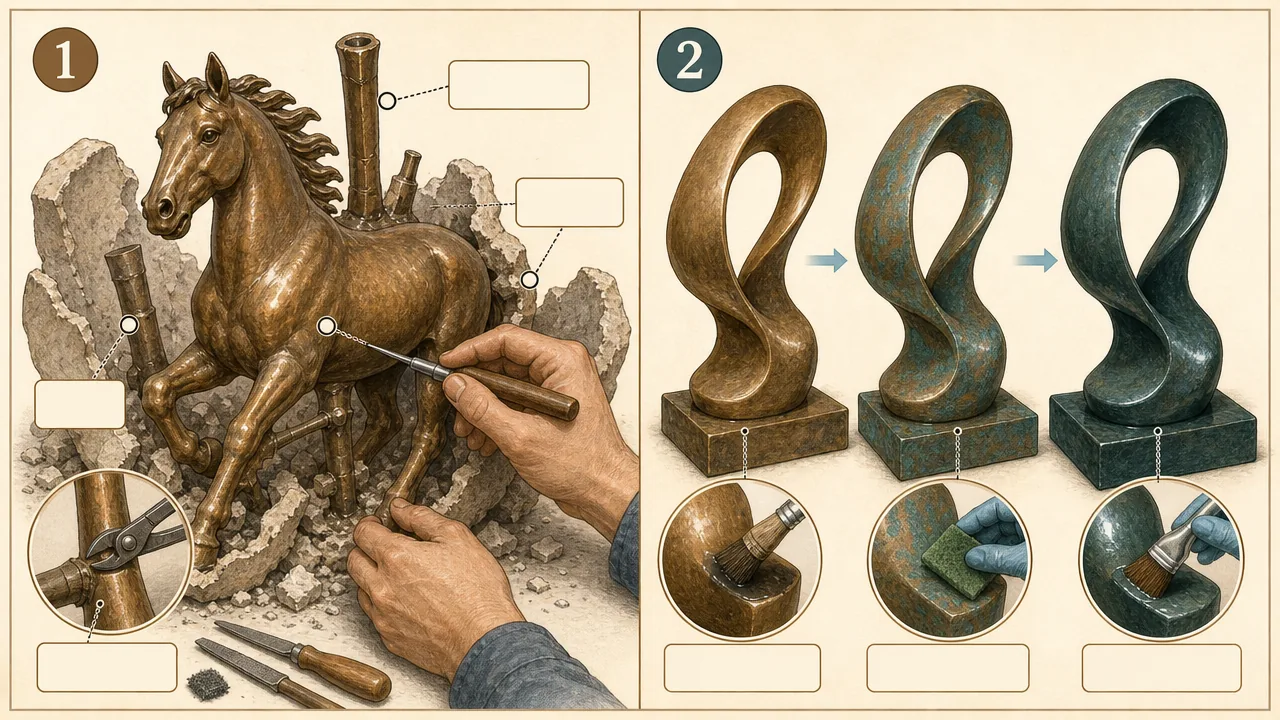
Quick answer: what is a bronze patina finish?
A bronze patina is a visible surface layer or color change on a copper-alloy object. It can develop through exposure, handling, environmental conditions or a controlled finishing treatment. A bronze patina finish is the selected surface appearance after the change has been developed, refined or protected. Put simply, patinated bronze is bronze with a visible patina on its surface.
Patina is not simply dirt. Color alone does not prove that an object is old. A green, blue-green, brown, black or reddish surface can also be a deliberate finish on a modern bronze reproduction. For a current product, describe the confirmed treatment and sample appearance instead of assuming age or historical origin.
How does bronze patina form?
Bronze surfaces respond to their surroundings. Moisture, oxygen, salts, pollutants, handling, cleaning products and nearby materials can all change a copper-alloy surface over time. The result also depends on the alloy, the original surface, the environment and the length of exposure.
Some changes look like an even color shift. Others form as highlights, dark recesses, mottled areas or a layer over raised details. Polishing, brushing, coloration, waxing and other treatments applied after casting can also affect the final look.
For conservation, the key question is whether the surface is stable. A firmly attached layer is different from loose, powdery or actively spreading corrosion. Do not remove an unfamiliar surface from a valuable or historically documented object without qualified conservation advice.
For a general view of how casting, cleanup and surface finishing relate, see the bronze casting process guide. It explains a general reproduction workflow and does not replace product-specific finish confirmation.
Why do bronze statues turn green?
Bronze statues turn green when copper in the bronze reacts at the surface with moisture, oxygen, salts, pollutants and other environmental conditions. Those reactions can create green or blue-green corrosion products that people often describe as patina or a verdigris-style surface. The color does not, by itself, prove that a statue is old, authentic, excavated or connected to a museum. A modern bronze reproduction can also receive a controlled green patina effect during finishing. The visible result depends on the object, existing surface, exposure, treatment, lighting and care. To compare a current reproduction, ask for close-up photos, the finish description, care guidance and a sample reference when consistency matters. Photography can shift the apparent balance between green highlights and darker recesses, so one online image is not a complete finish record. The same caution applies to bronze vessels, sculptures and decorative objects.
The same visual result can also be created as a controlled finish on a modern bronze reproduction. A green surface therefore describes appearance, not proof of age, origin or museum history. To judge a current piece, compare a close-up photo, the stated finish direction and care guidance.
Bronze Patina Colors and Color Chart
Quick bronze patina color chart: Bronze patina colors may appear dark brown, near-black, warm brown, green or blue-green. Mixed highlights can also appear. The exact result depends on the object, environment and finishing treatment. Use the chart below as a visual comparison for modern finish directions, not as a historical certificate or fixed universal standard.
| Visible direction | How it may read visually | What to confirm for a modern reproduction |
|---|---|---|
| Dark brown or near-black | Quiet, grounded and suited to deep relief | Whether highlights, recesses and edges are intended to vary. |
| Warm brown or aged bronze | Warmer and more wood-like in an interior setting | Whether the tone is even, layered or selectively highlighted. |
| Green or blue-green | Verdigris-style, weathered or mineral-inspired | Whether the color is a controlled modern finish and how stable care should be handled. |
| Mixed dark and light highlights | Helps relief, motifs and edges read from a distance | Which areas are intentionally emphasized in the current sample. |
These bronze patina finishes can read differently under warm indoor light, daylight and photography. Request current sample photos or a finish reference when consistency matters across multiple pieces.
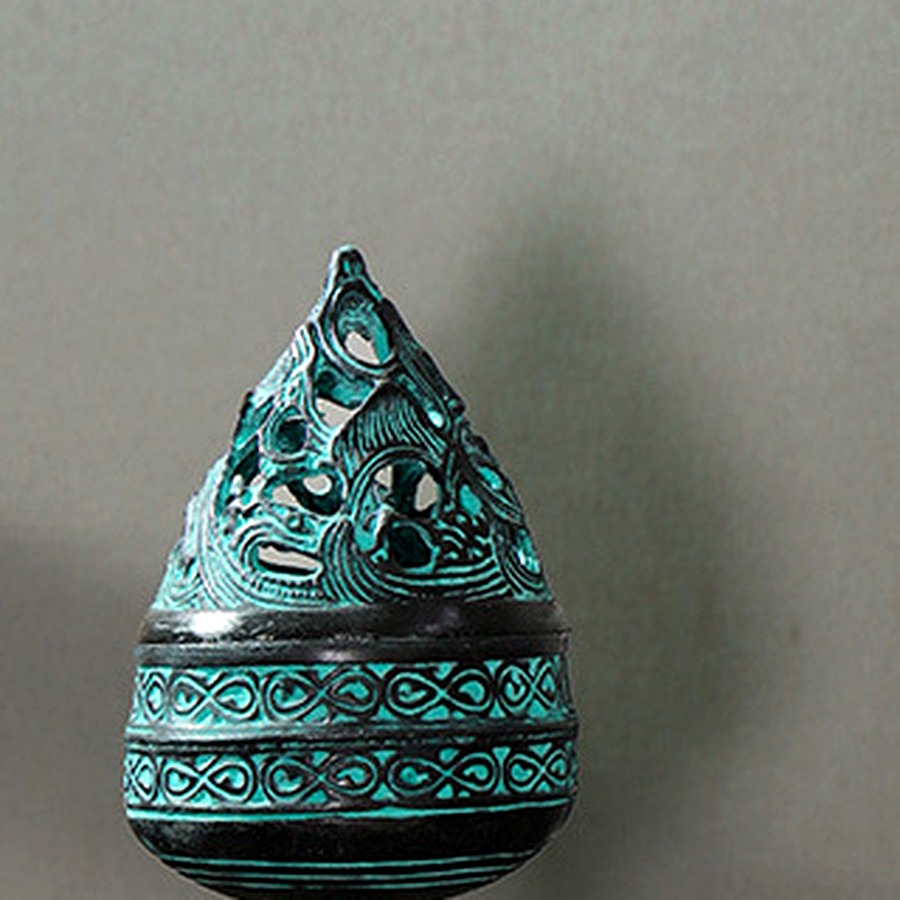
Bronze Patina Finish vs. Other Bronze Surface Finishes
These terms are related but not identical:
| Term | Meaning in a practical guide | Why it matters to buyers |
|---|---|---|
| Patina | A surface layer or visible color change associated with exposure or treatment. | It describes surface character, not product age by itself. |
| Patina finish | A selected or developed appearance that may combine color, contrast and protection. | It should be confirmed against a current sample. |
| Surface finishing | The wider group of steps used to refine, color, polish, highlight or protect a surface. | Different steps can create very different visual results. |
| Polished bronze | A brighter surface direction with more reflected light. | It may show fingerprints, scratches or tonal variation more clearly. |
In a reproduction listing, “aged-style bronze finish” or “green patina effect” can be clearer than language that implies an old object. The description should match what can actually be checked in the current sample.
Bronze Patina vs. Painted Bronze: How to Tell the Difference
A patinated bronze finish and a bronze paint finish can look similar. The visible result alone may not tell the whole story. Patina can describe a surface layer or color change created by exposure or a controlled treatment. A painted bronze finish uses a coating applied to the surface. Both can create a selected appearance on a modern object.
The question “bronze patina or paint?” cannot always be answered from a web image, because lighting and image processing can change the appearance. To learn how to tell if bronze is painted, ask for close-up images in consistent light. Also request the supplier’s finish description, care instructions and any sample used for approval. A visible film edge, peeling or a sharp boundary may justify more questions, but it is not by itself a laboratory identification.
| Finish description | What it may mean | What buyers should confirm |
|---|---|---|
| Patinated bronze finish | A visible tonal change or surface layer associated with exposure or controlled treatment. | How the finish was developed, protected and represented in the current sample. |
| Painted bronze finish | A paint or coating layer applied to create color, contrast or a consistent visual direction. | Adhesion, touch-up, cleaning limits and expected variation between pieces. |
| Aged bronze finish | A commercial appearance description that does not establish the object’s age. | The current sample, lighting conditions and wording that will appear in the quote. |
For a bronze sculpture patina vs. paint comparison, use the same rule: compare sample evidence and care guidance, not color labels alone. A valuable historic object should be assessed by a qualified conservator before any surface is tested or removed.
How to patina bronze: a safe high-level overview
The phrase how to patina bronze can describe a controlled finish, a conservation treatment or a home experiment. These are different activities. Chemicals, heat, salts and cleaning agents can create hazards or damage a surface when the object, ventilation and protective controls are not understood.
At a high level, a controlled finish usually involves:
- Preparing the surface: removing residue and deciding which areas should remain bright, dark or highlighted.
- Testing a small sample: checking the color, contrast, adhesion and appearance under the intended lighting.
- Building the finish gradually: applying a selected treatment or coloration in controlled stages rather than assuming one pass will create the final look.
- Refining the contrast: polishing, brushing or selectively cleaning raised areas when the design calls for relief to read clearly.
- Confirming protection and care: documenting the final surface direction and any care limits before the object is packed or displayed.
This overview is not a chemical recipe. For a valuable historic object, use a qualified conservator. For a current reproduction, confirm the supplier's available finish direction and request a sample or current reference photo before ordering.
Does bronze patina prove an object's age?
No. A patinated surface can be natural, accelerated, controlled or applied as part of a modern finishing system. A dark tone, green surface, worn highlight or uneven color pattern does not independently establish age, provenance, excavation history or museum authentication.
That distinction matters when comparing modern Chinese bronze reproductions with historical objects. CCLYF presents modern Chinese bronze reproductions made today. Product images can help a buyer review form and visible finish direction. They do not prove a historical original, a museum connection or a particular production method.
For clearer wording around current products, read the modern reproduction clarity guide. For the general relationship between casting and later finishing, see the lost-wax bronze casting guide.
How buyers should compare a bronze patina finish
For a design, hospitality or gift project, ask questions answered by the current product or sample.
| Buyer question | Why it matters |
|---|---|
| What is the finish called in the current quote? | Names such as dark bronze, green patina or aged-style finish can otherwise be interpreted differently. |
| Can I see current sample photos? | Lighting and photography can change how a surface color appears. |
| Which areas are highlighted? | Relief, edges and recesses may be treated differently to improve legibility. |
| Will pieces in one order match closely? | Hand-finished or surface-treated objects may show controlled variation. |
| How should the surface be handled? | Cleaning products, abrasion and moisture may change the finish. |
| Is this a modern reproduction? | The answer keeps finish language separate from unsupported age or provenance claims. |
For current product directions, browse the bronze incense burner series or the Chinese bronze reproduction collection. For small-batch sourcing, use the wholesale and small-batch buyer page.
Bronze patina in interiors and display settings
A patina finish changes how a bronze object relates to its surroundings. Darker surfaces can support wood, stone and low-contrast interiors. Green or blue-green directions can create a stronger mineral or garden-like accent. Mixed highlights can help a raised motif remain visible on a shelf, study desk, tea table or hospitality display.
Scale and lighting still matter more than a color label alone. Before selecting a piece, compare its height, footprint, relief, lid or support structure and viewing distance. The bronze display guide and the interior designers buyer page can help move from surface preference to a practical display decision. For hospitality or tea-room projects, see the hotels and tea spaces buyer guide as well.
Frequently asked questions
Is bronze patina the same as paint?
No. Patina refers to a visible surface layer or color change, while paint or another coating is applied to the surface. A modern object may use either finish direction, so confirm the supplier’s description and current sample instead of judging by color alone.
How can you tell painted bronze from patina?
Do not rely on one photograph. Request close-up images in consistent lighting, ask how the surface should be cleaned, and check whether the finish description identifies patina, paint or another coating. Peeling or a sharp edge can be a reason to ask for more information, but visual clues alone do not prove the finish chemistry.
What is the most common bronze patina color?
Brown, dark brown, black, green and blue-green are common visual directions discussed for bronze surfaces. The exact appearance depends on the object, environment and finishing treatment.
Is bronze patina the same as rust?
Bronze is a copper alloy, so its surface changes are not the same as the red iron-oxide rust associated with steel. A surface should still be assessed carefully if it is loose, powdery or actively spreading.
Can a modern bronze reproduction have a patina finish?
Yes. A modern reproduction can be given a selected surface color or aged-style finish. That finish does not make the object a historical original.
Can I clean a bronze patina from an old object?
Do not assume that cleaning is safe. A valuable, historic or unfamiliar object should be assessed by a qualified conservator before any surface is removed.
What should I include in a bronze finish inquiry?
Include the product or form direction, preferred color, quantity, destination, intended display setting and whether a current sample photo is needed before quote.
Further reading on bronze patina and conservation
For historic or valuable objects, conservation guidance is more appropriate than a general product article. These public references explain stable patinas, active corrosion and the technical nature of bronze patination:
From bronze patina research to a product question
Surface color is only one part of choosing a modern bronze reproduction. Once the finish direction is clear, connect it with the form, scale, display setting, quantity and packaging needs. CCLYF can then review the inquiry and confirm the details that need checking before ordering. For finish and process context, review the materials and craftsmanship overview.
Use Request Quote for a product-specific finish question, or review the bronze incense burner wholesale guide if the project involves multiple pieces.