Quick answer: what is Chinese bronze sculpture?
Chinese bronze sculpture is a broad description for three-dimensional bronze objects made in Chinese artistic and cultural traditions. Depending on the source, the phrase may include free-standing figures, animal forms, vessel-shaped objects, ritual bronzes with sculptural features, bells, supports and other objects whose form is read through volume rather than a flat surface.
It is therefore not one single category with one fixed function. A museum may catalogue an object as a vessel, a wine container, a ritual object, a musical instrument or a sculpture-like animal form. The safest first step is to describe the visible body, opening, support, lid, animal features, base and surface decoration before assigning a narrow historical label.
For CCLYF, this is a knowledge and custom-reference topic connected to modern bronze reproduction discussions. The website presents modern reproductions made today. A historical image can help define a direction, but it does not turn a current reproduction into an ancient original or establish museum provenance.
Major forms of Chinese bronze sculpture
When people search for Chinese bronze sculpture, they may be looking for very different kinds of objects. Separating the form families helps prevent a buyer from using a broad keyword while expecting a specific product category.
| Form direction | What to look at | What still needs confirmation |
|---|---|---|
| Animal-form vessel | Animal body, opening, lid, spout, chamber, feet or vessel support. | Exact catalogue classification, historical date, material and current reproduction specifications. |
| Free-standing animal sculpture | Pose, anatomy, movement, base, viewing angle and surface treatment. | Artist or maker, edition, dimensions, weight, installation and quote-stage details. |
| Human or figure-supported form | Figure, posture, support relationship and how the object carries or frames another form. | Named historical identity, intended function and whether a modern reference is available. |
| Ritual vessel with sculptural features | Container body combined with animal handles, masks, legs, posts, lid ornaments or relief. | Period, ritual interpretation, provenance and the details of a current reproduction. |
| Bell, display or architectural form | Body, suspension, frame, repeated units, supports and installation relationship. | Sound, load, installation, tuning, dimensions and performance requirements. |
The Chinese Bronze Vessels guide provides a broader vocabulary for ding, jue, zun, gu, gui and related forms. The vessel versus sculpture comparison focuses specifically on the difference between an animal-form vessel and a bronze animal sculpture.
Animal forms, vessel forms and the boundary between them
Animal imagery is one of the most recognizable directions in Chinese bronze art, but an animal-shaped object is not automatically a sculpture. Some objects use an animal as the entire body; others use an animal as a lid ornament, handle, support or relief motif. The container structure may be the most important clue.
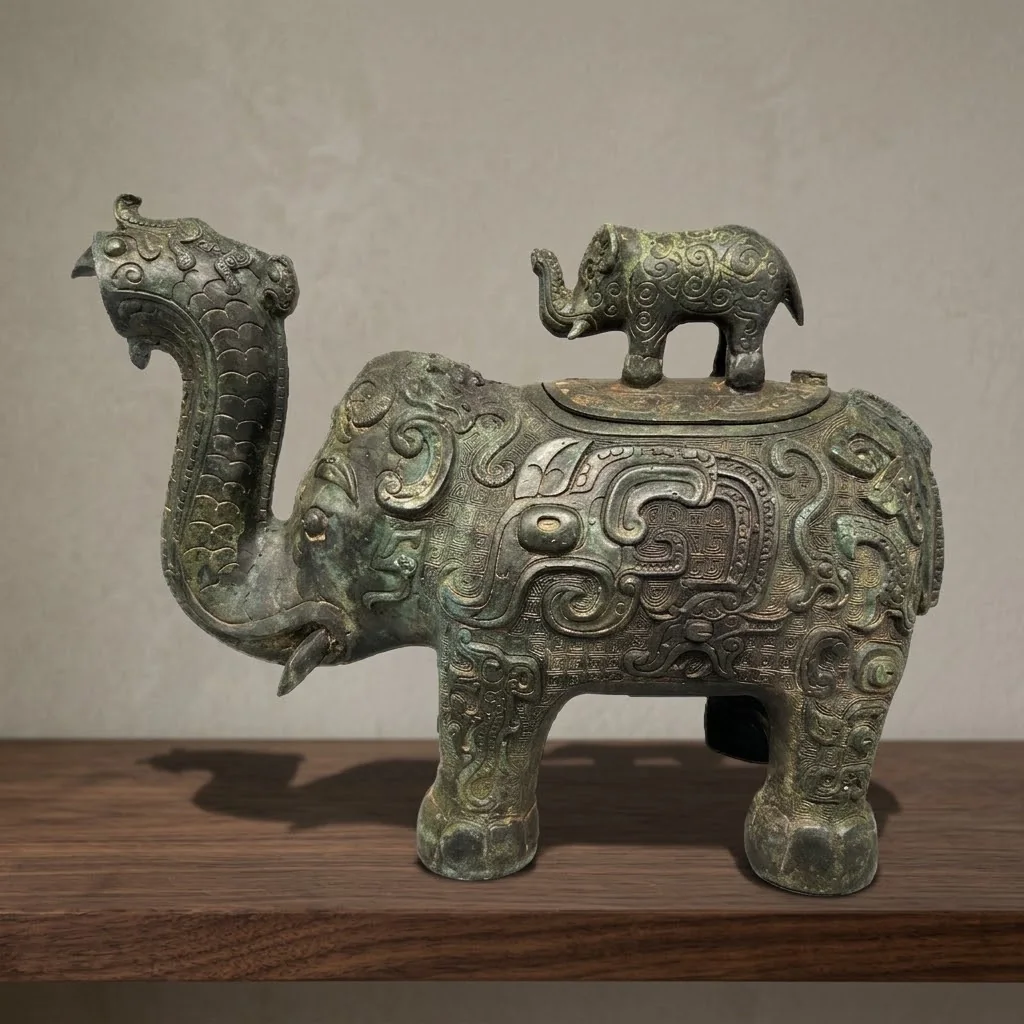
For example, a buyer looking at an elephant-form vessel should ask whether the body reads as a container, whether the top or opening is visible, and whether the object is presented as a vessel in its source record. A free-standing elephant sculpture answers a different visual question: pose, anatomy and display presence may matter more than an opening or chamber.
The animal-shaped Zun guide explains why a vessel term and an animal silhouette should be read together, not collapsed into one universal label. The Chinese bronze Zun guide provides further terminology for source-specific vessel discussion.
What symbolism can Chinese bronze sculpture suggest?
Symbolism depends on the named object, its period, its source record and the context in which it was used or displayed. A responsible explanation can discuss associations without claiming that every animal, mask or vessel has one universal meaning.
Animal forms may invite readings connected with strength, protection, authority, longevity, fertility, abundance or other cultural ideas. Those associations can be useful for a design or gift conversation, but they should be framed as possible cultural readings rather than automatic translations. A museum record may identify the animal and context without assigning one fixed symbolic message.
Surface decoration also needs caution. A Taotie-like face, bird, dragon, geometric band or scrolling pattern can help describe the visual language of an object. It cannot by itself prove date, authenticity, ritual use or provenance. Read the Taotie motif guide for a source-aware explanation of visible pattern and meaning limits.
For a modern buyer, it is useful to separate three layers:
- Visible form: What animal, body, opening, support or pattern can be seen?
- Source-supported interpretation: What does a museum, catalogue or educational source say about this named example?
- Contemporary design intention: What association should a modern object communicate in a home, hotel, tea space, gift or exhibition setting?
Why symbolism is not proof of provenance
A common mistake is to treat a familiar animal or motif as proof that a bronze object is ancient, royal, ritual or from a particular dynasty. Historical identification is more demanding. It may require an object record, inscription, archaeological context, documented collection history, technical study and comparison with specialist literature.
The Shang vs Zhou Bronze Vessels guide explains why continuity between periods makes simple visual formulas unreliable. An early Zhou object may preserve earlier visual language, and a modern reproduction may intentionally borrow an earlier silhouette or motif.
For this reason, the strongest wording is specific: "This object shows an animal-form body and a Taotie-like surface reference," or "This museum record describes the named vessel as a Zun." Avoid turning a visual clue into a claim about age, excavation, museum status or historical ownership.
Historical bronze sculpture versus modern reproduction
A historical bronze object and a modern bronze reproduction can share a silhouette, relief pattern or display idea while belonging to completely different evidence categories. The historical object may have a dated collection record, excavation context, inscription, conservation history or published measurements. A modern reproduction is a made-today object that needs its own current description and confirmation.
| Evidence type | What it can support | What it cannot prove by itself |
|---|---|---|
| Historical museum record | Named object, source-specific terminology, collection context and published details. | That another similar-looking object has the same date, origin or classification. |
| Current product page | Published product name, visible photographs, page description and inquiry route. | Historical age, excavation, museum provenance or unlisted specifications. |
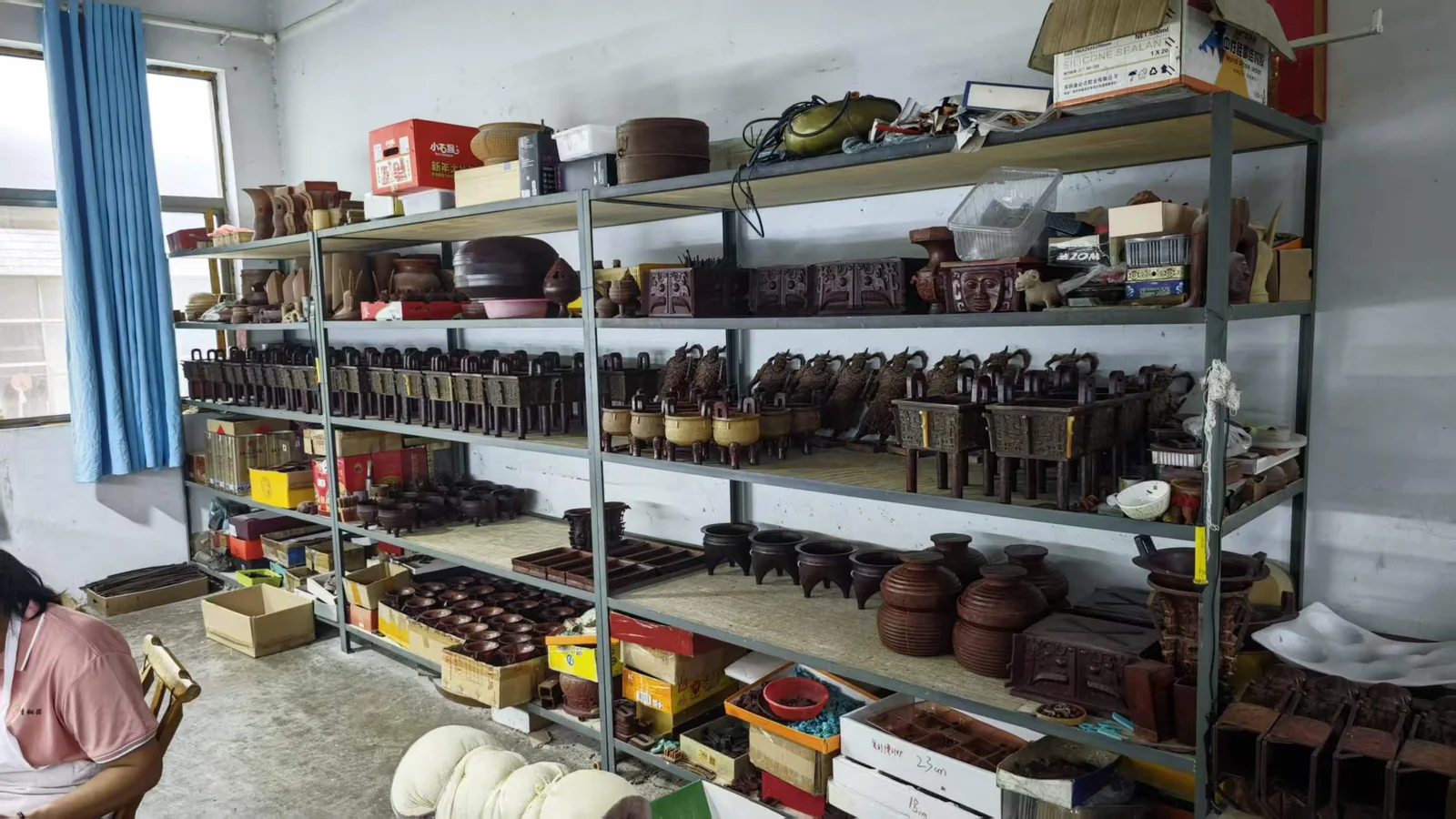
| Workshop or showroom photograph | Visible display surroundings and a first-hand visit record. | CCLYF ownership of the workshop, one fixed process for every product or a completed customer case. |
| Reference photograph | Silhouette, visible details, surface direction and possible reproduction brief. | Exact material, weight, price, MOQ, inventory, delivery timing or historical identity. |
CCLYF presents modern bronze reproductions made today. It does not sell certified historical originals through this site. The Modern Reproduction Clarity guide explains the same boundary in more detail.
How a custom bronze sculpture reproduction begins
A custom request is easiest to review when the reference package separates what is visible from what is still a project requirement. The starting point can be a photograph, drawing, 3D reference, museum record or physical object, subject to what can be confirmed during the quote process.
- Send the reference: Provide front, side, rear and detail photographs when available. Include a drawing or a scale reference if the silhouette depends on proportion.
- Describe the intended form: State whether you want a vessel-shaped object, a free-standing animal sculpture, a figure-supported form or another direction.
- Mark the visual priorities: Identify the parts that matter most, such as the head, lid, legs, opening, relief, handle, base, inscription or overall profile.
- Separate project requirements: Add quantity, destination, display setting and any size limit or packaging concern.
- Confirm quote-stage information: Material, exact dimensions, weight, price, MOQ, packaging, sample options and delivery timing must be confirmed case by case.
The Custom Bronze Reproductions page is the commercial handoff for photos, drawings or physical references. The Bronze Casting Process guide explains a general process sequence, but it is not a fixed specification for every sculpture or vessel project.
What CCLYF's bronze production-side experience adds
CCLYF's bronze reference team works from the buyer's visible reference and coordinates questions with a long-established Chinese bronze production partner. The partner brings more than 30 years of bronze reproduction experience and an integrated workflow covering model development, casting, hand finishing and sales, with a broad range of bronze vessels, animal forms, ritual-inspired objects, bells and decorative sculpture directions available for customization discussions.
The production-side team also includes a senior craft practitioner with formal regional craft credentials and long experience interpreting complex vessel forms, relief, openwork, gilded effects and aged surface directions. This experience is useful because a custom brief often fails at the point where a broad name is mistaken for a complete specification.
The review checks the visible silhouette, opening, supports, relief, surface direction, display context and requested scale before separating what can be seen from what still needs production-side confirmation. Projects can range from small cultural objects to large custom sculpture or installation directions, subject to reference review and case-by-case confirmation.
Experience that can be described
- Direct workshop-visit and showroom-review context
- More than 30 years of bronze reproduction experience on the production side
- Integrated model development, casting and hand-finishing capability
- Discussion of directory products and additional vessel forms for customization
Details confirmed case by case
- Exact material, dimensions, weight and finish
- Sample route, packaging, price, MOQ and delivery timing
- Whether a specific reference can be reproduced as requested
- Scale, installation and handling requirements for larger projects
Evidence boundary: These are production-side capability and experience signals from CCLYF's partner network. They do not mean that CCLYF owns the workshop, that every displayed object is offered under the same supply conditions, that every project has the same scale, or that every request follows one fixed process or specification.
Where Chinese bronze sculpture can fit today
Modern bronze sculpture and vessel forms can be considered for a range of display contexts: an entryway, study, tea room, hotel lobby, cultural showroom, gift presentation or exhibition-style setting. The right direction depends on the viewing distance, available surface, surrounding materials and the role the object needs to play.
A compact animal-form vessel may work as a close-view cultural accent, while a larger sculptural form may need more breathing room and a stable base. A bell or repeated display set raises different questions about frame, installation and handling. These are design and sourcing questions, not automatic promises about product suitability.
For room planning, see How to Use Animal-Form Bronze Vessels in Interior Design. For workshop visit and showroom context, see the Workshop page.
Frequently asked questions
What is the difference between Chinese bronze sculpture and a Chinese bronze vessel?
Chinese bronze sculpture is a broad description that can include vessel-shaped objects, animal forms and free-standing sculpture. A Chinese bronze vessel is a more specific category organized around a container form or vessel tradition.
What animals appear in Chinese bronze sculpture?
Sources and current visual references may discuss elephants, birds, owls, rhinoceroses, deer, rabbits, rams and other animal directions. The exact classification and meaning depend on the named object or source.
What does a Chinese bronze animal symbolize?
It may suggest different cultural associations depending on the animal, period, object and context. There is no single universal meaning that can be safely applied to every modern or historical bronze animal form.
Can CCLYF make a custom Chinese bronze sculpture?
CCLYF can discuss modern bronze reproduction directions outside the current directory from photos, drawings or a physical reference. Feasibility, material, dimensions, weight, price, MOQ, packaging and delivery timing require case-by-case confirmation.
Can a modern reproduction be called an ancient Chinese bronze sculpture?
No. A made-today object should be described as a modern bronze reproduction or custom bronze object unless separate evidence supports a different historical claim.
Sources and further reading
These resources provide wider historical, object-level or technical context. They describe their named objects or teaching materials and do not automatically establish facts about CCLYF products or custom projects.
- The Metropolitan Museum of Art: Shang and Zhou DynastiesBroader historical context for early Chinese bronze culture.
- The Metropolitan Museum of Art: Wine vessel (Zun)Object-level terminology for reading a named vessel record.
- Brooklyn Museum: animal-shaped bronze vessel recordNamed collection evidence for source-specific animal-form discussion.
- Harvard Art Museums: Chinese bronze vessel recordObject-level comparison and catalogue language.
- Smithsonian National Museum of Asian Art: Piece-mold casting glossaryTechnical context for an important ancient Chinese bronze-casting tradition.
- Chinese Bronze Vessels: Types, Forms and Ritual ContextBroader vessel vocabulary and modern reproduction boundaries.