
Quick answer: what is a Chinese bronze ding?
A Chinese bronze ding is a vessel form commonly recognized by a substantial body supported by legs, often three legs in a round form or four legs in a square form. Historical ding vessels are frequently discussed in relation to ritual food, ceremonial presentation and political or lineage contexts, but the exact meaning depends on the named object, period and record.
The word ding is a form name, not a complete identity certificate. A photograph may show the body, legs, handles, surface decoration and proportions, but it cannot by itself establish age, provenance, alloy, excavation history or museum status.
For CCLYF, this is a knowledge and reference topic connected to custom discussion, not a claim that every ding shown in a workshop showroom is a current catalog item. Buyers can provide photographs, drawings or a physical reference for a modern bronze ding reproduction conversation, while material, exact dimensions, weight, finish, price, MOQ, packaging and delivery details remain quote-stage questions.
What does the ding bronze vessel look like?
The most useful first description of a ding is structural. Look at the relationship between the vessel body, its supports and its upper edge before interpreting the decoration. A round ding commonly presents a rounded or swelling body over three legs. A square ding, sometimes called a fang ding in English-language discussions, presents a more angular body and commonly uses four legs.
Handles may rise from the rim or upper body, depending on the individual form. Some examples have a cover or additional fittings, while others are open vessels. Surface decoration may include masks, bands, geometric patterns or inscriptions, but decoration alone should not be used to assign a date or authenticate an object.
| Visible feature | What it helps describe | What it cannot prove alone |
|---|---|---|
| Body | Round, swelling, square-sided or otherwise shaped vessel profile. | Exact period, function or historical identity. |
| Legs | Three-legged tripod direction or four-legged square direction. | That the object is an excavated or museum-documented ding. |
| Handles and rim | Upper silhouette, lifting points and visible proportion. | Material composition, load rating or safe handling requirements. |
| Decoration and inscriptions | Surface language that can be compared with a named reference. | Authenticity, date or a complete reading without source evidence. |
Round ding versus square ding: what is the difference?
The clearest visual distinction is the plan and support structure. A round ding is generally read as a tripod vessel with three legs. A square ding has a more angular body and four supporting legs. These are useful orientation points, not a substitute for the specific object record.
The difference matters in modern reproduction discussions because the body geometry affects the reference brief. A buyer comparing a round tripod ding with a square fang ding should provide complete views of the body, legs, rim, handles and any cover. A front photograph alone may hide the number of supports or make a square form look more rounded than it is.
Do not assume that every three-legged Chinese bronze vessel is a ding. A jue, for example, also has three legs but is recognized through a different combination of projecting spout, raised posts and cup-like body. The Chinese Bronze Vessels guide gives the broader vocabulary, while the Jue Cup guide focuses on that separate form.
What does Chinese bronze ding meaning refer to?
When people ask about Chinese bronze ding meaning, they are often asking why the form is associated with ritual, authority or status. Museum and academic discussions commonly connect ding vessels with food offerings, ceremonial practice, lineage, political authority and the ritual order of early China. Those associations are important, but they are not a single universal symbol that can be applied to every ding-shaped object.
Meaning changes with context. A historical vessel with an inscription, a documented tomb context or a museum record can support a more specific interpretation. A later archaistic work or a modern bronze ding reproduction may borrow the silhouette and decorative language without sharing the original ritual setting, age or provenance.
The safer buyer description is therefore specific: name the visible form, identify the historical reference if it is documented, and distinguish historical interpretation from contemporary display use. The Shang vs Zhou Bronze Vessels guide explains why period, ritual set, decoration and inscription should be read together rather than reduced to one motif.
How to identify a ding vessel from photographs
A photograph can start a useful form conversation when it shows enough of the object. The goal is not to make a historical authentication decision from one image. The goal is to separate visible evidence from questions that require a museum record, technical review or quotation-stage confirmation.
- Show the whole silhouette. Include a straight-on view and enough surrounding space to see the body, rim and all supporting legs.
- Capture the sides and rear. Side and rear views help distinguish a round tripod from a square four-legged form and reveal handles, seams or attached elements.
- Record the upper structure. Photograph the rim, handles, cover and opening without cropping away the connections.
- Separate decoration from interpretation. Close-ups of masks, bands or inscriptions are useful, but a motif is not by itself proof of date or meaning.
- State the intended use. A display object, museum-style presentation, cultural gift or interior project may require different decisions about scale, finish, packing and handling.
If the reference is incomplete, say what is missing. A clear list of unknowns is more useful than filling gaps with assumed dimensions, weight, material or historical identity.
Historical ding vessels versus a bronze ding reproduction
A historical ding vessel is understood through its own record: collection or excavation information, measurements, inscriptions, conservation history and research context may all matter. A bronze ding reproduction is made today and may follow a historical silhouette, a named reference or a broader archaic visual direction without sharing the original object's age or provenance.
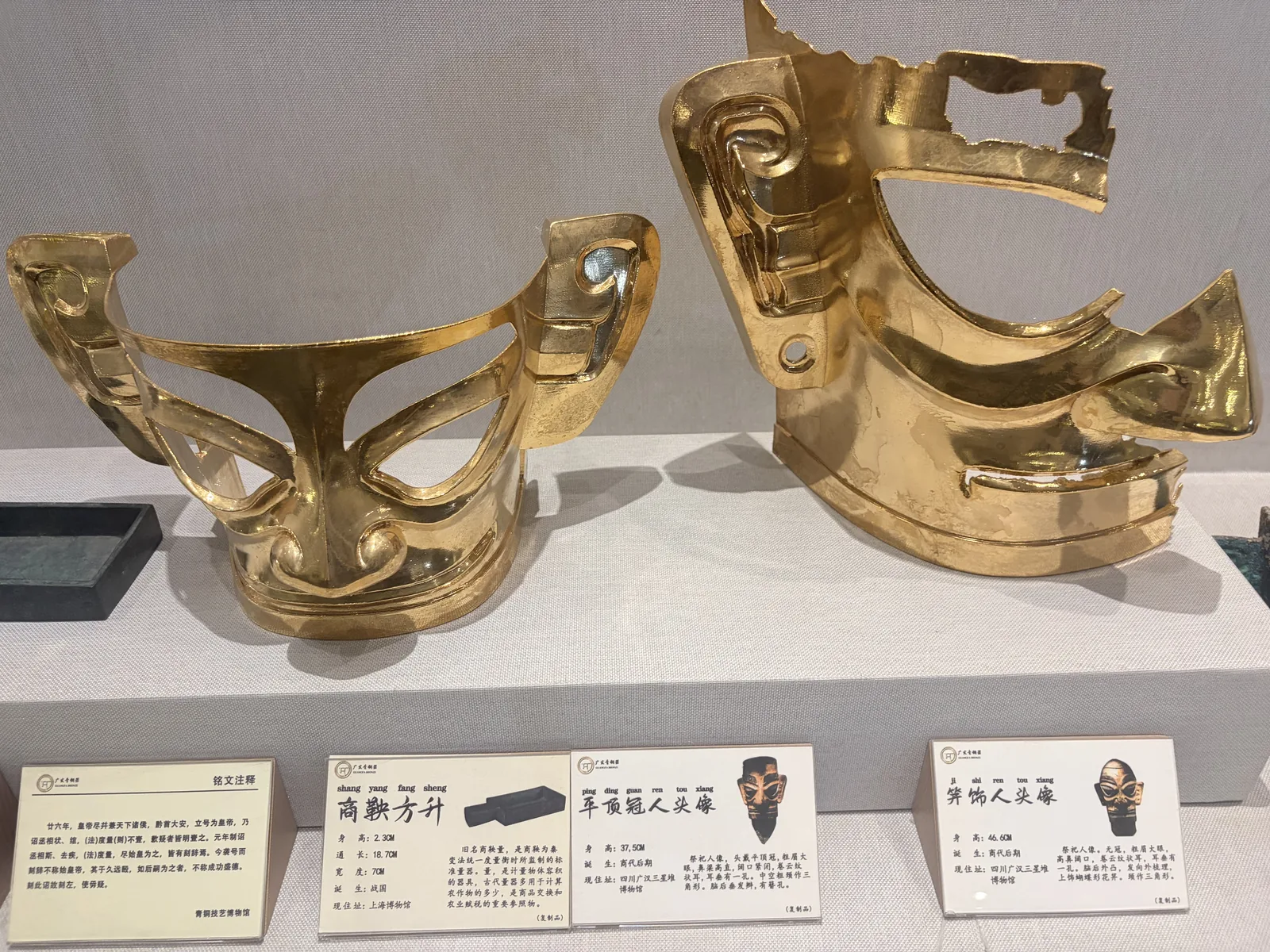
CCLYF presents modern Chinese bronze reproductions made today. The showroom photographs on this page document a workshop visit and visible display surroundings. They do not mean that CCLYF owns the workshop, that every catalog product is made in one location, or that a displayed ding is an authenticated historical object.
| Evidence type | Useful for | Still needs confirmation |
|---|---|---|
| Reference photo | Body shape, number of legs, handles, rim, decoration and available angles. | Exact dimensions, weight, material, finish recipe and historical status. |
| Museum or academic record | Named object, period, documented context and source-specific interpretation. | Whether the record applies to a different modern object or display. |
| Modern project brief | Form direction, approximate scale, quantity, display setting and finish preference. | Feasibility, sample option, price, MOQ, packaging and delivery timing. |
For a general explanation of how a modern bronze reproduction discussion moves from reference to model, casting, finishing and inspection, read the Bronze Casting Process guide. It describes a general workflow, not a fixed specification for every ding project.
How to start a custom bronze ding vessel inquiry
A custom bronze ding vessel inquiry should begin with a clear reference and a clear distinction between appearance and project requirements. Send the best available photographs, drawings or physical-reference notes, then explain how the object will be used.
- Name the direction. Say whether you are considering a round tripod ding, a square fang ding or another related vessel form.
- Share complete views. Include front, side, rear, top and base views where possible, plus close-ups of important decoration or inscriptions.
- Describe the visual priorities. Note the body proportion, number of legs, handles, rim, cover, surface pattern and finish direction that matter most.
- Explain the setting. Identify whether the object is for a private display, hotel or hospitality interior, cultural gift, exhibition-style presentation or another use.
- Separate known facts from open questions. Mark confirmed dimensions or reference measurements separately from details that still need review.
- Leave quote-stage details open. Material, exact dimensions, weight, price, MOQ, packaging, delivery timing and sample options are confirmed case by case.
Use the Custom Bronze Reproductions path if the Ding direction is outside the current product directory. The site presents examples, not the full limit of what can be discussed; feasibility and quotation depend on the reference and project brief.
Frequently asked questions
What is a ding vessel?
A ding is a Chinese bronze vessel form commonly recognized through a substantial body supported by legs, often three in a round form or four in a square form. Historical meaning depends on the specific period, object record and context.
What is the difference between a ding and a jue?
A ding is generally described as a tripod or related cauldron-like vessel form, while a jue is recognized through a projecting spout, raised posts, three legs and a different cup-like silhouette. Compare the visible structure before relying on a label.
Does a ding always symbolize power?
Historical ding vessels are often discussed in relation to ritual, lineage and authority, but a single symbolic meaning should not be assigned to every object. The period, inscription, context and source record matter.
Can CCLYF provide a bronze ding reproduction?
A buyer can submit photos, drawings or a physical-reference description for a custom discussion. Feasibility, material, dimensions, finish, sample options and quotation details are reviewed case by case.
Can a photograph prove that a ding is ancient?
No. A photograph can show visible form and decoration, but it cannot by itself prove age, excavation, provenance, authenticity, alloy or museum certification.
Sources and further reading
These resources provide broader historical and technical context. Their statements apply to the named source, object or teaching page and do not automatically classify current CCLYF products.
- The Metropolitan Museum of Art: Ancient Chinese BronzesBackground for reading ancient Chinese bronze forms through ritual, material culture and historical context.
- The Metropolitan Museum of Art: Shang and Zhou DynastiesGeneral context for the historical periods in which ding traditions are discussed.
- The Metropolitan Museum of Art: Ritual tripod cauldron (Ding)A named collection record illustrating how a specific historical ding is documented.
- Smithsonian National Museum of Asian Art: Piece-Mold CastingTechnical context for an important ancient Chinese bronze-casting tradition.
- Asian Art Museum: Casting Bronze VesselsEducational material for understanding how historical bronze casting is explained.
- Chinese Bronze Vessel TypesBroader vessel-form vocabulary and modern reproduction boundaries.