Quick answer: what are Chinese bronze masks?
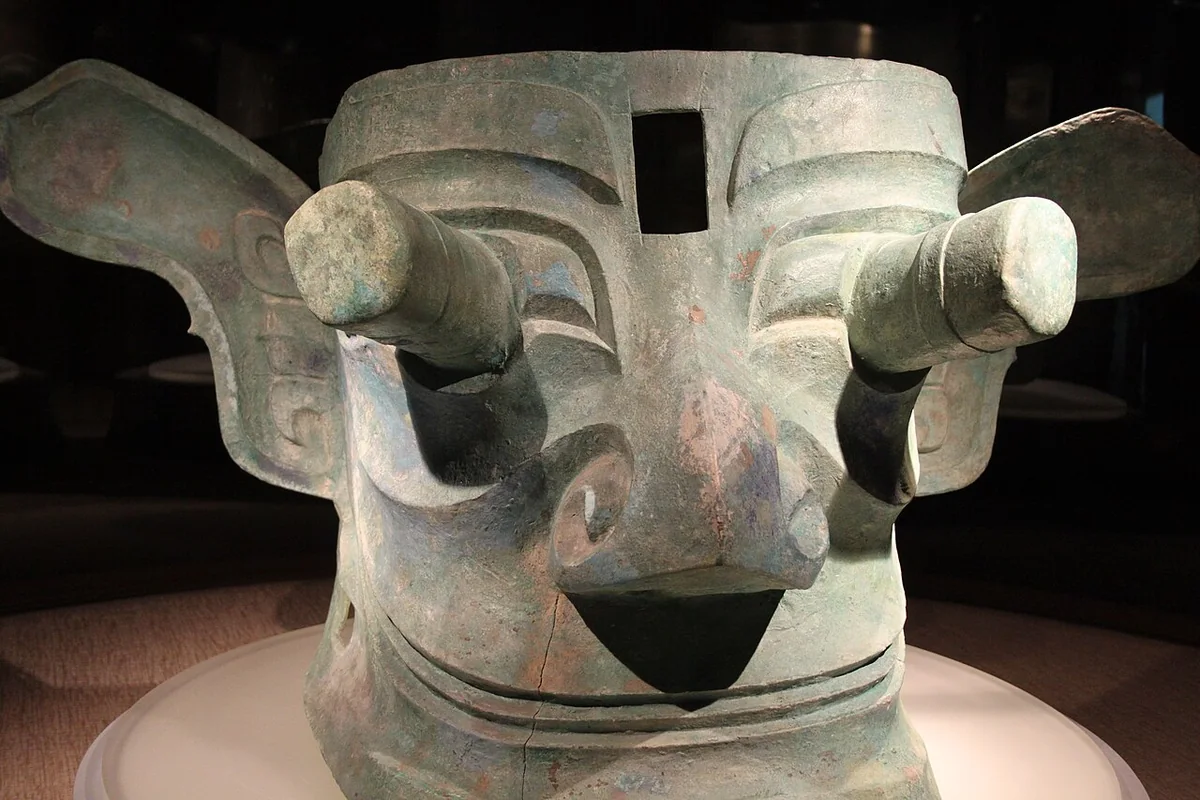
Chinese bronze masks are face-form objects recorded and interpreted within specific archaeological and museum contexts. Sanxingdui examples are especially recognizable for features such as projecting pupils, broad faces and extended ears. Those visible traits identify a form; they do not, by themselves, establish the object's exact purpose, the identity of the face or one universally accepted meaning. Museum labels and excavation records should be used for claims about a named mask.
The phrase Chinese bronze mask can also be used loosely for a face motif on a vessel or for a sculptural head. Those are not automatically the same object type. This page focuses on Sanxingdui face-form bronzes and uses the terminology of the cited museum sources.
CCLYF's role here is an educational guide and a possible handoff for a modern, reference-led reproduction inquiry. The historical masks pictured by museums are not current CCLYF catalog products. Feasibility, material, scale, finish, price, minimum order, packaging and delivery details must be reviewed for each separate project.
What does a Sanxingdui bronze mask look like?
A Sanxingdui bronze mask is recognized by the design of the face as a whole, not by one feature in isolation. Museum descriptions and photographs show broad facial planes, pronounced eyes and, on some examples, extended ears. Individual masks differ, so a description of one object should not be turned into a rule for every Sanxingdui face-form bronze.
Some museum records place particular masks in a Late Shang-period context and give an approximate date of 1300-1100 BCE. That date belongs to the named object and its record; it is not a universal date for every mask or bronze head associated with Sanxingdui. Later excavation discoveries and separate objects need to be read through their own documentation.
For a careful visual description, record what is actually visible:
- Face outline: overall width, height, jaw shape and the relationship between forehead and cheeks.
- Eyes: whether the pupils project, how the eyelids are shaped and whether both sides appear symmetrical.
- Ears: their direction, length and connection to the face, without assigning a symbolic meaning from shape alone.
- Surface: visible color, corrosion, breaks, repairs or display lighting. A photograph does not identify the alloy or conservation history.
- Mounting details: holes, tabs or attachment points, if visible. They may help describe construction, but their original use needs object-specific evidence.
These observations make a useful catalogue description or reproduction brief. They do not authenticate an object or prove how it was worn, displayed or used.
What does a Chinese bronze mask mean?
There is no single meaning that can safely be assigned to every Sanxingdui bronze mask. Museum interpretation of particular examples discusses possible connections with figures and stories in early Shu traditions, but those proposals are not direct proof that every mask portrayed a named deity, ruler or ancestor.
For example, the Shanghai University Museum's discussion of a mask with protruding pupils presents more than one interpretation, including proposed links to Cancong and to other mythic figures. The Hong Kong Palace Museum likewise places specific bronze heads and masks in an exhibition context rather than treating the whole group as one settled symbol. These are interpretations of named objects, not universal definitions of the Chinese bronze mask meaning.
It is useful to keep three kinds of statements separate:
- Observation: the pupils project, the face is wide, or the ears extend beyond the sides.
- Documented context: a museum record identifies the object, find context, approximate date or collection history.
- Interpretation: a scholar or museum proposes what a feature or figure may have represented.
A responsible description names the source and the object before explaining a proposed meaning. It avoids turning a hypothesis into a proven fact or repeating a dramatic explanation without showing where it came from.
Bronze mask, bronze head and Taotie motif: what is the difference?
The words mask, head and mask motif describe different visual categories in museum records. A label matters because a face-shaped panel, a sculptural head and a pattern on a vessel answer different identification questions.
| Term | What it describes | What not to assume |
|---|---|---|
| Bronze mask | A face-form bronze catalogued as a mask, such as a Sanxingdui example with projecting pupils. | That it was worn as a human mask or had one proven ritual function. |
| Bronze head | A sculptural head-form object catalogued separately from a mask. Some documented Sanxingdui heads are shown with a distinct gold face covering. | That the head and the covering were cast as one piece or that all examples share the same construction. |
| Taotie or mask-like motif | A face-like decorative design applied to a vessel or other object surface. | That a vessel motif is itself a freestanding bronze mask. |
When a search result or product description says “Taotie mask,” check whether it means a standalone object or a vessel decoration. CCLYF's Taotie motif guide covers the latter. For a wider overview of sculptural forms, see the Chinese bronze sculpture guide.
How should you read a museum record?
A museum record is evidence about the object it identifies. It may provide a catalogue name, find location, approximate period, measurements, materials or an interpretation. Those details should be attributed to that record, not copied onto another object that merely looks similar.
Before repeating a claim about a Sanxingdui bronze mask, check:
- Object name: is the source describing a mask, a head, a face covering or a vessel ornament?
- Attribution and date: does the museum give an approximate date, and does it apply to this exact object?
- Find context: is the archaeological context stated, or is the object discussed without a proven find record?
- Interpretation wording: does the source say “is,” “may be,” “is thought to” or “has been proposed as”? Keep that level of certainty.
- Image rights: is the photograph licensed for reuse, and does the page require a photographer credit?
A museum display photograph is not a substitute for a collection record. Likewise, an image used to explain a historic object is not evidence that CCLYF has produced, stocked or supplied a reproduction of it.
Can a Sanxingdui-style bronze mask be reproduced today?
A reference-led discussion can start with a historical mask photograph, museum record, drawing or physical model. The first step is to clarify which visible form the buyer means and which parts must be reviewed; a reference does not automatically establish that a particular size, alloy, finish or construction can be reproduced exactly.
CCLYF can review a custom bronze mask direction outside the current product directory. This is an inquiry path, not a claim that a specific mask is a current catalog item or that every requested feature is approved. Project feasibility and commercial details are confirmed case by case.
For a useful first review, prepare:
- The museum or publication reference and the exact object name, if known.
- Front, side and rear views, plus close-ups of pupils, ears, edges and any attachment points.
- A reliable scale reference or requested approximate dimensions, clearly marked as confirmed or proposed.
- The intended setting, such as a display, exhibition, cultural interior or study collection.
- The visual priorities and any elements that may be simplified, enlarged or adapted.
- Any known rights or permissions relevant to using the reference image or design.
Material, exact dimensions, weight, surface finish, sample options, price, minimum order quantity, packaging and delivery timing remain quote-stage questions. A photo can show visible design; it cannot confirm those production or commercial details.
Continue to Custom Bronze Reproductions to discuss a mask-form project, or use Bronze Casting Process for a general explanation of modern reproduction workflow. General process education is not a fixed specification for every project.
Frequently asked questions
What is the meaning of a Sanxingdui bronze mask?
The exact meaning of each mask is not settled by its appearance alone. Museum and scholarly interpretations discuss particular objects and possible figures, but those proposals should not be generalized to every mask.
Are Sanxingdui bronze masks portraits of real people?
A stylized face does not identify a specific historical person by itself. A portrait claim needs object-specific evidence from a reliable archaeological or museum source.
Is a bronze mask the same as a bronze head?
No. Museum catalogues distinguish face-form masks from sculptural heads. Some documented heads also have a separate gold face covering, so use the source's exact object name.
Is a Taotie pattern a bronze mask?
Usually the term refers to a face-like motif on a vessel or object surface, not a separate freestanding mask. Check whether a source is discussing the motif or a complete three-dimensional object.
Can CCLYF quote a custom bronze mask reproduction?
Buyers can submit photographs, drawings or a documented reference for an initial discussion. Feasibility, material, dimensions, finish, sample options and commercial terms are reviewed case by case.
Sources and image credit
These sources describe specific objects, museum interpretations or image licensing. Their statements do not automatically identify or authenticate other objects.
- Shanghai University Museum: Sanxingdui bronze mask with protruding pupilsObject-focused discussion that presents multiple interpretations rather than a single settled meaning.
- Hong Kong Palace Museum: Sanxingdui exhibition and object audio guideExhibition context for specific bronze heads and masks, including a human head with a gold mask.
- Wikimedia Commons: photograph by Gary Todd, CC0 1.0Image source and reuse statement for the historical reference photograph shown above.
- What Is the Taotie Motif?CCLYF guide to face-like vessel decoration and interpretation limits.