
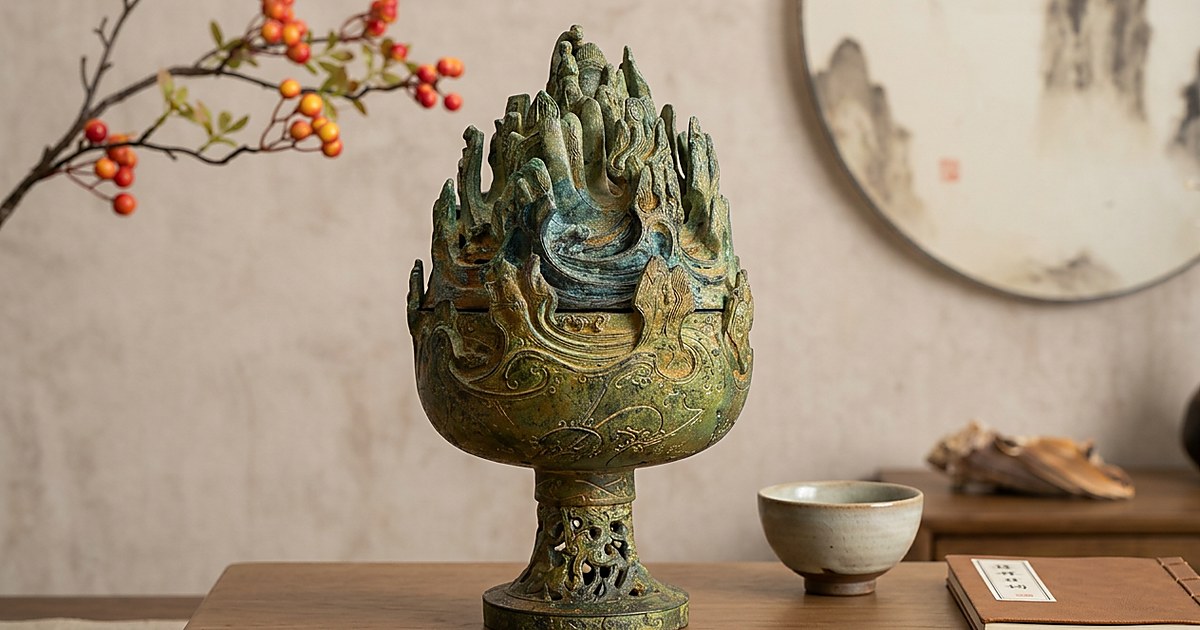
Quick answer: how should bronze decor be cleaned?
Start with gentle dry dusting and careful handling. Before using water, soap, polish or any other product, identify or confirm the surface direction and the object's intended use. A dark, green, brown, painted, lacquered or aged-style appearance does not by itself tell you which cleaning method is safe. Begin with the least aggressive option. Stop if the color or sheen changes unexpectedly. If the surface is unclear, ask the supplier, a conservator or another qualified specialist.
This approach matters because modern bronze decor is not one uniform surface. Two objects can both be described as bronze while having different textures, coatings, decorative effects or uses. A method that suits one confirmed modern surface may be wrong for a delicate patina, painted detail, lacquered area or object with residue inside. In practical terms, how to care for bronze decor starts with protecting the surface you already have, not trying to make every piece look newly polished.
Before cleaning, identify the surface
Look at the object in good light and record what you can see before touching it. Note whether the surface is even or intentionally varied. Also note whether it is glossy or matte, smooth or textured, and whether the highlights or darker areas seem to be part of the design. Check for paint-like blocks of color, a clear coating, exposed metal, loose decoration, soft corrosion-like deposits or areas that already look worn.
These observations are useful, but they are not a substitute for confirmed product information. The word patina can describe a surface appearance or a specific finishing direction, while a product may also include other surface treatments. For a simple explanation of patina, color language and patina versus paint, read the bronze patina and finish guide.
| What you notice | What it may help you decide | What still needs confirmation |
|---|---|---|
| Uniform dark or brown tone | Use gentle dusting first and avoid assuming it can be polished. | Whether the tone is patina, paint, lacquer or another finish. |
| Green, blue-green or highlighted areas | Protect the visible color and avoid abrasive contact. | Whether the color is an intended finish or an unwanted deposit. |
| Textured or recessed decoration | Use a soft tool without forcing material into details. | Whether the texture is loose, coated or structurally stable. |
| Residue inside a burner | Separate loose ash from soot, oil or other deposits. | Whether the object is intended for incense use and how the interior is finished. |
Routine dusting and handling
For ordinary bronze decor maintenance, begin with the simplest routine: keep the object stable, remove loose dust gently and avoid dragging anything across the surface. A clean, soft brush or a soft lint-free cloth can help with loose dust when the surface is stable. Work slowly around raised motifs, narrow openings, feet, handles and edges where dust can collect.
Hold the object at a structurally strong area, usually near the base or main body, rather than lifting it by a lid, thin handle, projecting animal form or decorative tip. When an object is large, heavy, top-heavy or difficult to grip, use two hands or ask for help. Put a soft, clean surface under it while working so a slip does not become a hard impact.
Routine care is also about the environment. Avoid placing bronze decor where it will be repeatedly splashed, exposed to uncontrolled condensation, rubbed by nearby objects or touched with oily hands. Display conditions vary by object, so this is a general handling recommendation, not a promise of outdoor or high-moisture durability.
How to clean bronze decor safely
Use a decision sequence instead of a universal recipe:
- Start dry. Remove loose dust without scraping, sanding or polishing.
- Confirm the surface. Check the product information or ask for item-specific guidance before introducing moisture or chemicals.
- Choose the smallest test area. If a wet or product-based method has been confirmed as suitable, test it in an inconspicuous area first and document the result.
- Use minimal contact. Do not soak the object or push liquid into joints, hollow sections, openings or textured recesses unless the care instructions specifically allow it.
- Stop early. Stop if the cloth picks up unusual color, the surface becomes brighter, the texture changes, a coating feels tacky or a deposit spreads.
- Reassess before continuing. A failed small test is a reason to pause, not a reason to apply more pressure or a stronger product.
Do not assume that water, soap, alcohol, vinegar, lemon, wax or metal polish is safe for every bronze reproduction. Compatibility depends on the confirmed surface, the construction and the intended use. Even a product sold as a bronze cleaner can change a deliberately aged-style finish or remove material that the owner wanted to preserve.
How to clean a bronze incense burner
Cleaning a bronze incense burner requires one extra question: what kind of residue is present? Loose ash, dry soot, oily residue and hardened deposits are not the same problem. A burner that has recently been used should cool fully before it is moved or cleaned. Do not handle a warm lid, body or ash area just because the outside feels cooler.
Begin by removing loose material carefully. Keep the object steady and avoid scraping the interior with sharp tools. Pause if residue is stuck, the surface is coated, or the burner includes painted, lacquered or highly textured areas. Confirm the correct method for that specific item. The Chinese bronze incense burner guide explains form and use questions, while the bronze incense burner series shows current product directions.
Do not treat a burner as automatically safe for every incense, ash, smoke, oil, heat or food-contact situation. A product photograph and a general category name cannot confirm those uses. For a current product, ask about the selected sample, intended use, surface direction, interior treatment and cleaning instructions before ordering or using it.
How to preserve bronze patina and finish
In many display projects, preserving the intended appearance is more important than making the surface shiny. A patinated or aged-style finish may be designed to show tonal variation, darker recesses and selected highlights. Strong rubbing can flatten that contrast. Abrasive action can also change the way light moves across raised decoration.
Think of care as protecting a visual direction. Keep dust from building up, avoid unnecessary handling and do not use polishing products unless the exact finish has been confirmed to tolerate them. If you want a different appearance, treat that as a finishing or refinishing question rather than an ordinary cleaning step. The bronze patina finish guide covers color and surface language without assuming that every green or dark area has the same cause.
What not to use without confirmation
For an unfamiliar bronze object, avoid starting with abrasive pads, wire brushes, steel wool, strong acids, bleach, solvents, aggressive metal polish, long soaking, pressure washing or uncontrolled heat. These methods can be especially risky around coatings, painted details, intentionally varied color, joints, hollow bodies and delicate raised decoration.
This is a caution list, not a universal museum conservation rule. A qualified professional may use a controlled method for a particular object after examining its condition. The point for a buyer or owner is to avoid turning a small cleaning question into an irreversible surface change.
Care questions to confirm before buying or using a reproduction
When requesting a quote or reviewing a sample, ask for practical information in writing:
- What surface or finish direction is intended for the selected sample?
- Is the object intended for display only, or is a specific use being considered?
- Will it be exposed to ash, smoke, oil, moisture, sunlight or outdoor conditions?
- What is the recommended first cleaning step for this exact sample?
- Are there areas that should not be rubbed, wetted, polished or exposed to heat?
- What handling and packaging notes should be followed during delivery and installation?
These questions help separate general bronze care instructions from confirmed product information. If you are comparing a current bronze Jue cup, an animal-form bronze vessel or an incense burner, include the exact product name or reference image in the inquiry.
Frequently asked questions
How often should bronze decor be dusted?
Dust it when loose dust is visible or when the display environment calls for it. A gentle, regular routine is usually easier to control than infrequent aggressive cleaning. The right interval depends on the object, surface and room conditions.
Can I use water or soap on bronze decor?
Do not assume that water or soap is safe for every bronze object. Confirm the surface first, test only when the care direction allows it and stop if the appearance or texture changes.
How do I clean a bronze incense burner after use?
Let it cool fully, separate loose ash from other residue and begin with careful dry removal. Ask for product-specific guidance before using water, chemicals, soaking or scraping, especially when the interior finish is unknown.
Is bronze patina the same as dirt?
No. The word patina can describe a surface or finish direction, while dust and residue are deposits that may sit on top. You need product or professional confirmation before deciding that a dark or green area should be removed.
Can I polish a patinated bronze reproduction?
Only if the confirmed care instructions say the selected finish can be polished. Polishing may change the intended color, contrast or surface texture, so it should not be treated as a default cleaning step.
What should I ask before cleaning a bronze reproduction?
Ask what finish is on the selected sample, whether it is display-only or intended for a specific use, which areas should stay dry, and what the first recommended cleaning step is. Keep the answer with the product records.
Sources and limitations
Source note: This article uses a conservative, object-specific care approach consistent with collection-care guidance. The Western Australian Museum Collections and Conservation Manual is useful further reading for the difference between routine care and specialist conservation. Its guidance should not be copied onto every CCLYF product without checking the selected object's surface and intended use.
Important limitation: CCLYF product pages describe modern reproductions made today. Product photographs, general bronze terminology and visual appearance do not by themselves confirm exact alloy, coating, patina chemistry, heat tolerance, ash safety, outdoor durability or a universal cleaning method. Confirm those details for the selected sample before ordering or using it.